معرفی
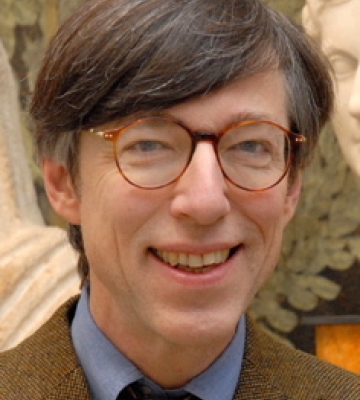
Stephan W. E. Blum serves as a Researcher at the Department of Ancient Studies and Art History within the Faculty of Humanities at the University of Tübingen. His work centers on Bronze Age Anatolia and Southeast Europe, with primary focus on Troy excavations. He directs the DFG-funded project "Die bronzezeitlichen Außensiedlungen von Troia: Grabungen und Forschungen 1987-2012" (2021-2024).
Blum's research spans Bronze Age chronology, ethnoarchaeological formation processes, and Troy's cultural transitions. His publications reveal expertise in stratigraphic analysis, ceramic studies, and organic residue analysis – notably reconstructing early wine consumption in Troy through depas amphikypellon vessels. Recent work connects environmental strain to Troy's collapse, drawing contemporary parallels.
His 15 most recent publications demonstrate consistent focus on Troy's chronological framework (Periods IV-V), with increasing integration of scientific methods like petrographic and organic residue analysis. Key trends include reevaluating Troy's interregional contacts during the Early Bronze Age and examining waste disposal patterns to understand daily life.
Blum maintains active public engagement through The Conversation, translating complex archaeological findings for broader audiences regarding Troy's relevance to modern environmental challenges and historical film accuracy.
His research is supported by major grants including the DFG project BL 1305/3-1, Gerda Henkel Stiftung Fellowship (2018-2020), and funding from the Malcolm Hewitt Wiener Foundation. He collaborates extensively with international institutions like the Institute for Mediterranean Archaeology (Cincinnati).
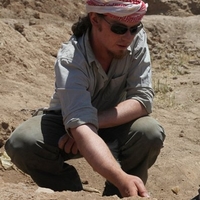
Blum leads excavations at Troy's lower city and contributes to the Troia Project, focusing on Bronze Age settlement structures and formation processes. His work integrates traditional excavation with cutting-edge scientific analysis to reconstruct Troy's cultural sequence from the Chalcolithic through Middle Bronze Age.