معرفی
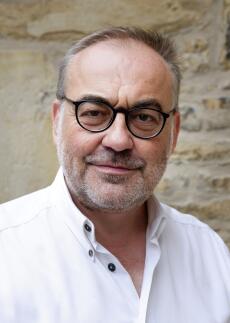
Stephan Tölke is a Research Associate and Lecturer at the Institute for Arabic and Islamic Studies at Westfälische Wilhelms-Universität Münster. Since January 2015, he has been actively contributing to the Cluster of Excellence 'Religion and Politics' and the ALEA project (Arabic Literature and Rhetoric of the Later Centuries, 11th-18th Centuries), while pursuing his doctoral studies in Islamic Studies.
His educational background includes:
- Doctoral studies in Islamic Studies at Westfälische Wilhelms-Universität Münster (since April 2015)
- MA in Islamic and Arabic Studies from University of Münster & Leiden University (2012-2014)
- BA in History and Arabic-Islamic Culture from Westfälische Wilhelms-Universität Münster (2007-2012)
Tölke's research focuses on Islamic political thought during the Mamluk period (1250-1517), with particular emphasis on the works of Ibn Nubāta al-Miṣrī (1287-1366). He investigates the intersection between religious discourse and political pragmatism in medieval Islamic governance, analyzing how concepts like secularism, justice, and effective rule were conceptualized in Arabic 'Fürstenspiegel' literature. His work bridges historical Islamic political theory with contemporary questions about religion and governance in Muslim-majority societies.
Analysis of Tölke's scholarly output reveals a consistent focus on Mamluk-era political thought, with particular attention to the writings of Ibn Nubāta. His research explores the tension between religious doctrine and practical governance, examining how medieval Islamic political theorists navigated this complex relationship. A significant portion of his work also analyzes plague-related medical texts from the Islamic tradition, demonstrating the breadth of his engagement with historical Islamic knowledge systems across multiple disciplines.
Tölke has been actively involved in major research initiatives:
- Member of the ALEA project (2014-2020), funded by the DFG Gottfried Wilhelm Leibniz Program (Project Number: BA 1153/11-1)
- Team member in the Cluster of Excellence 'Religion and Politics' project on Ibn Nubāta (2012-2018), EXC 212 B2-3
As a lecturer, Tölke has taught courses in Classical and Modern Arabic, historical text reading, and Islamic concepts of government through the ages. His academic work centers around the Leibniz Prize Research Center at the University of Münster, where he contributes to the comprehensive edition of Ibn Nubāta al-Miṣrī's works as part of the long-term ALEA project.