معرفی
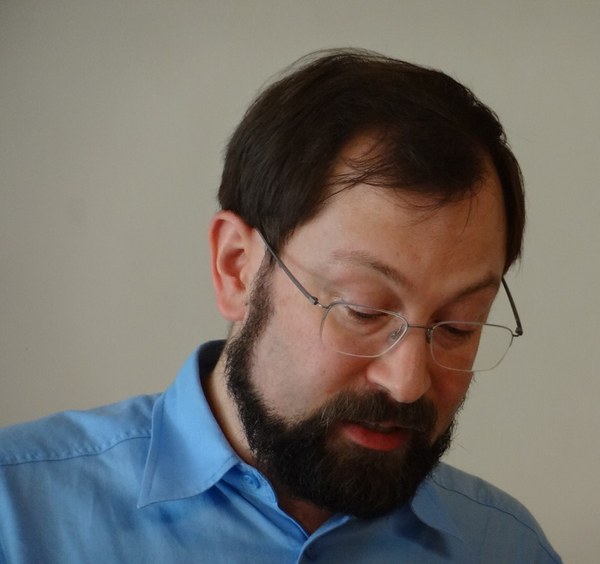
Stefan Schick serves as a Lecturer for Special Assignments in Philosophy at the University of Leipzig's Institute of Philosophy within the Humanities Center, and holds an Adjunct Professor position at the University of Regensburg since November 2023. His academic career spans multiple prestigious institutions including the University of Illinois at Chicago and Northwestern University as a Feodor Lynen Research Fellow.
- University of Leipzig: Lecturer for Special Assignments (April 2021–present)
- University of Regensburg: Adjunct Professor (November 2023–present), former Academic Councillor (2011–2021), Acting Professor (2020–2021)
- Alexander von Humboldt Foundation: Feodor Lynen Research Fellow (2014–2016)
Dr. Schick's research centers on Enlightenment philosophy and German Idealism, with particular focus on Kant and Jacobi's conceptions of reason, ethics, and religion. He argues against equating Enlightenment with Western chauvinism, positioning it as a global cosmopolitan project requiring reciprocal recognition of cultural differences. His work extends to medieval Latin and Arabic philosophical traditions to demonstrate Enlightenment's non-European philosophical roots. His teaching methodology emphasizes critical engagement with classical texts from the Middle Ages to present to cultivate autonomous and cosmopolitan thinking among students.
His publication trends reveal consistent focus on Enlightenment philosophy across multiple historical contexts, with recent work bridging classical German philosophy with medieval Islamic and Christian thought. Key thematic clusters include normative foundations of self-determination, historical development of reason, and cross-cultural philosophical dialogue.
- Feodor Lynen Scholarship from Alexander von Humboldt Foundation (2014)
- Academic Research Sabbatical Program from University of Regensburg (2017)
- DAAD Research Scholarship (2010)
Dr. Schick has secured significant research funding through Humboldt Foundation fellowships and DAAD grants, supporting international collaborative research at institutions including University of Toronto, Pontifical Institute of Mediaeval Studies, and Wittgenstein Archive Bergen. His academic mentorship extends to supervising doctoral candidates and guiding students through complex philosophical texts across historical periods. His current research integrates classical German philosophy with medieval Islamic scholarship to develop a globally inclusive understanding of Enlightenment principles.
His work operates within the Institute of Philosophy's research framework, engaging with colleagues specializing in history of philosophy and contributing to the Humanities Center's interdisciplinary initiatives. Current projects examine the relationship between medieval philosophical traditions and modern conceptions of reason, with particular attention to cross-cultural philosophical dialogue.