معرفی
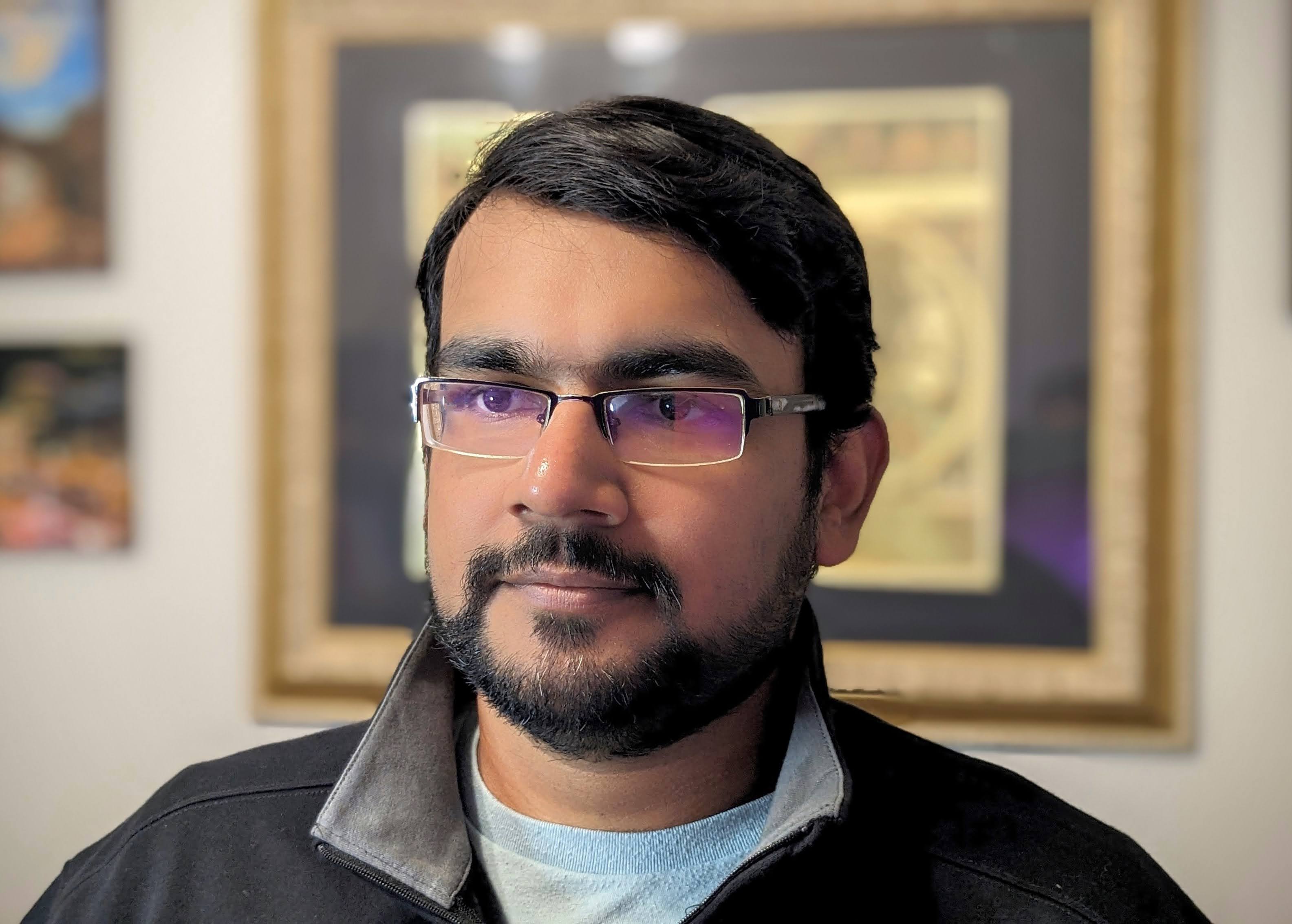
Sourav Dutta is a Research Fellow at the Oden Institute for Computational Engineering & Sciences at the University of Texas at Austin, where he works with Clint Dawson in the Computational Hydraulics Group. Prior to joining UT Austin in October 2022, he was an ORISE postdoctoral fellow at the Coastal & Hydraulics Laboratory of the U.S. Army Engineer Research and Development Center (ERDC) from September 2017 to August 2022.
Dr. Dutta's research lies at the intersection of physics-based computational methods and data-driven machine learning techniques for environmental flow problems. His work focuses on developing efficient numerical approximations by combining physical principles with modern machine learning algorithms. His primary research areas include:
- Model Order Reduction
- Computational Fluid Dynamics
- Scientific Machine Learning
- Uncertainty Quantification
- Applied Mathematics
His publication record reveals a strong trajectory in reduced order modeling for environmental hydrodynamics, particularly for advection-dominated problems that challenge traditional numerical methods. His research has evolved from foundational work on hybrid numerical methods for porous media flows to cutting-edge applications of deep learning and neural ODEs in computational hydraulics.
Dr. Dutta has presented his research at major venues including SIAM conferences, Computational Methods in Water Resources meetings, and the HydroML Symposium. In September 2022, he co-organized a minisymposium on Machine Learning and Data-Driven Methods for Forward and Inverse Problems at the SIAM Mathematics of Data Science meeting.
His educational background includes a PhD in Mathematics from Texas A&M University (2017), supervised by Dr. Prabir Daripa, and an Integrated BSc & MSc in Mathematics & Computing from the Indian Institute of Technology, Kharagpur (2010).
At the Oden Institute, Dr. Dutta is currently working on compound flood simulation capabilities within Adaptive Hydraulics (AdH), reduced order modeling for coastal engineering applications, and physics-based operator learning frameworks for environmental flows. He has also developed pyNIROM, an open-source Python package for non-intrusive reduced order modeling of time-dependent problems.