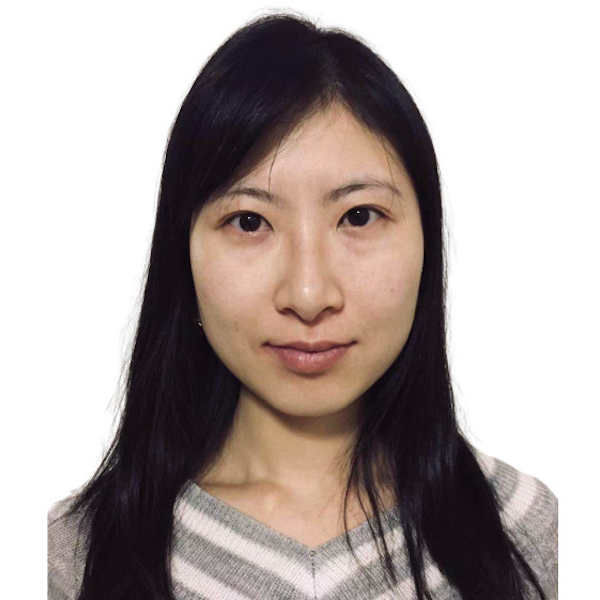
Shenghan Guo
استادیار · Knowledge-informed data analytics and AI
Arizona State Universityمعرفی
Shenghan Guo is an Assistant Professor in the School of Manufacturing Systems and Networks at Arizona State University, specializing in data-driven solutions for smart manufacturing. She leads the DAIM (Data Analytics & Insights in Manufacturing) research lab, which focuses on human-AI collaboration in manufacturing processes. Her lab utilizes specialized equipment including an OPTOMEC Aerosol Jet Printer for flexible 3D printing applications.
Education:
- Ph.D. in Industrial and Systems Engineering, Rutgers University (2021)
- M.S. in Engineering Sciences and Applied Mathematics, Northwestern University (2016)
- M.S. in Financial Mathematics, Johns Hopkins University (2014)
- B.S. in Financial Engineering, Jilin University (2013)
Her research integrates knowledge-informed AI with human-centered approaches to advance manufacturing systems. Key areas include:
- Human-in-the-Loop ML: Developing collaborative AI systems that incorporate human expertise
- Additive Manufacturing: In-situ monitoring and defect detection for 3D printing
- Process Optimization: Real-time quality control using computer vision and signal processing
Publications (2017-2025) demonstrate a consistent focus on machine learning applications in manufacturing, with recent emphasis on generative AI for process simulation, contrastive learning for worker monitoring, and multi-modal data fusion for quality prediction. Over 60% of recent works involve additive manufacturing applications.
Awards and Honors:
- ASU FWA Outstanding Mentor Award (2023)
- INFORMS Best Paper Runner-up (2021)
- IISE Data Challenge Winner (2019-2020)
- NSF Conference Support Awards
Advising and Grants: Currently mentors three PhD students (Hasnaa Ouidadi, Pius Gyamenah, Boyang Xu) whose work has received SME 30 Under 30 recognition and AEC awards. Secured lab funding for advanced manufacturing equipment supporting electronic printing and human-machine interaction research.
Teaching includes courses on computational modeling (EGR 219), machine learning (RAS 585), and specialized manufacturing topics. Developed new curriculum integrating real-world manufacturing data with Python-based ML implementations.