
معرفی
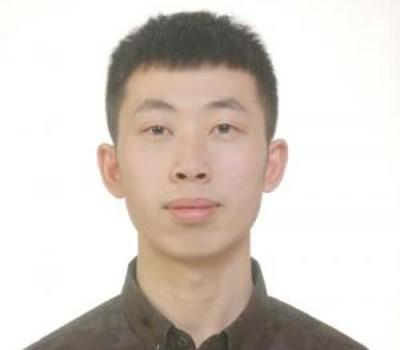
Wenjia Wang serves as an Assistant Professor in the Department of Mechanical, Industrial, and Manufacturing Engineering at Oregon State University's College of Engineering. Her research focuses on advancing additive manufacturing through physics-based modeling and AI-driven process optimization.
Her academic credentials include:
- Ph.D. in Mechanical Engineering, Georgia Institute of Technology (2022)
- M.S. in Theoretical and Applied Mechanics, Northwestern University (2018)
- B.E. in Composite Materials and Engineering, Harbin Institute of Technology (2017)
Dr. Wang's research spans 3D printing of renewable materials, AI/ML applications in manufacturing, Digital Twin development, and physics-based modeling of metal additive processes. Her work integrates solid mechanics with machine learning to optimize composite material behavior and address porosity/distortion challenges in laser powder bed fusion. The Advanced Manufacturing research group she leads develops predictive models for keyhole formation, lack-of-fusion defects, and thermal distortions.
Recent publications reveal a concentrated focus on laser powder bed fusion physics, with emphasis on predictive modeling of porosity mechanisms and boundary condition effects. Her analytical approaches bridge fundamental thermal-fluid dynamics with practical manufacturing constraints to enhance metal 3D printing reliability.
Dr. Wang actively recruits Postdocs, PhD, MS, and undergraduate researchers with expertise in solid mechanics, machine learning, robotics, and composite materials. She directs the Advanced Manufacturing research group which develops AI-enhanced process models and collaborates with industry partners on renewable material applications. The lab specializes in physics-based simulation frameworks coupled with experimental validation for next-generation additive manufacturing systems.

