معرفی
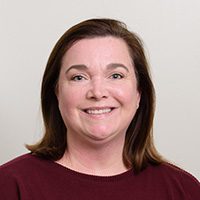
Sarah Hathcock serves as Assistant Professor of Nursing and Undergraduate Program Director for both BSN and ABSN programs at the College of Nursing, Charleston Southern University. With over 20 years as a registered nurse and Certified Nurse Educator (CNE) credential, her clinical expertise spans medical-surgical and pediatric nursing, and she actively shapes curriculum through university-wide committees including Academic Council and University Curriculum Committee.
Her educational qualifications include an Associate Degree in Nursing (ADN), Bachelor of Science in Nursing (BSN), and Master of Science in Nursing (MSN) from Charleston Southern University (2011), where she received the MSN Excellence in Nursing Education Award and was inducted into Sigma Theta Tau International Honor Society of Nursing. She is currently pursuing a Doctor of Nursing Practice (DNP) with Executive Leadership emphasis at Anderson University.
Research focuses on nursing faculty resiliency and work-life balance, alongside mentoring-driven retention strategies for nursing students. These interests stem from her commitment to sustainable academic environments and professional development in high-stress healthcare education, reflecting clinical priorities in student well-being and workforce readiness.
Scholarly output centers on practical nursing education applications, exemplified by her 2018 presentation addressing health emergencies in classroom settings. This work demonstrates alignment between her clinical background and educational mission to bridge theoretical knowledge with real-world crisis management skills.
Scientific recognition includes:
- MSN Excellence in Nursing Education Award
- Sigma Theta Tau International Honor Society of Nursing induction
Administrative leadership features her directorship of undergraduate programs and committee roles, while professional engagement spans the National League for Nursing and Nurses Christian Fellowship. Her former board service with South Carolina League for Nursing underscores regional influence in nursing education standards.
Collaborative work occurs through university curriculum committees and professional societies, integrating faith-based support systems into academic frameworks as noted in her mission statement about students being 'covered in prayer by faculty and staff.' Current focus areas include executive leadership development via her DNP studies and advancing faculty/student retention models.