معرفی
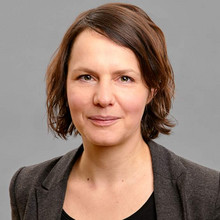
Dr. Sarah Gentrup is a researcher at Humboldt University of Berlin, affiliated with the Institute for Quality Development in Education (IQB) and the Berlin Institute for Empirical Integration and Migration Research (BIM) as an associate member. Her work focuses on educational assessment, teacher cognition, and equity in learning environments within the Faculty of Humanities, Social Sciences and Education.
Her academic credentials include:
- Master of Arts in Educational Science: Research and Development in Social and Educational Organizations, Freie Universität Berlin (2009-2012)
- Bachelor of Arts in Educational Science: Education, Upbringing and Quality Assurance, Freie Universität Berlin (2006-2009)
Gentrup's research examines how teacher expectations and stereotypes manifest across gender and socioeconomic lines, investigating their impact on instructional interactions and student outcomes. She specializes in evaluating language education interventions and addressing gender-related disparities through empirical classroom studies, contributing to evidence-based teaching practices in German educational contexts.
Her recent publications reveal consistent focus on intersectional dynamics in education, particularly how teacher biases compound with student characteristics to influence academic trajectories. Current work analyzes gender role attitudes in mathematics and reading performance, while longitudinal studies track self-fulfilling prophecies in classroom feedback loops using large-scale assessment data.
Dr. Gentrup actively contributes to major research initiatives including:
- Scientific coordination of IQB educational trends (2024-present)
- JuBiv project on gender disparities in educational outcomes (2020)
- BiSS project for language promotion (2017-2020)
- KuL competence acquisition studies (2012-2018)
These projects involve collaboration with national educational agencies and university partners to develop assessment frameworks and teacher training interventions. Her research teams integrate quantitative analysis of national datasets with classroom observation methodologies to evaluate educational equity.