معرفی
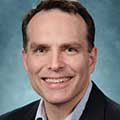
Professor Robert Newton is a distinguished academic at the University of Calgary, holding a professorship in the Department of Physiology and Pharmacology within the Cumming School of Medicine. He maintains multiple significant research affiliations including as a Full Member of the Calvin, Phoebe and Joan Snyder Institute for Chronic Diseases, a Child Health & Wellness Researcher at the Alberta Children's Hospital Research Institute, and a Full Member of the Inflammation Research Network. His work is centrally focused on understanding the molecular mechanisms underlying respiratory inflammatory diseases, particularly asthma and COPD.
Newton earned his B.Sc. in Biochemistry from Imperial College of Science and Technology, London (1987) followed by a Doctor of Philosophy in Molecular Genetics from the Royal Postgraduate Medical School, University of London (1992). His educational foundation in molecular biology and biochemistry has directly informed his research trajectory in pulmonary pharmacology and inflammation.
Professor Newton's research program centers on the molecular mechanisms of glucocorticoid action in the treatment of airway inflammation. His work specifically investigates how glucocorticoids (corticosteroids) function as anti-inflammatory agents in asthma treatment and why combination inhalers containing both glucocorticoids and long-acting β2-adrenoceptor agonists (LABAs) demonstrate enhanced clinical efficacy. The Newton lab pursues several interconnected research threads: mechanisms of anti-inflammatory glucocorticoid action; enhancement of glucocorticoid action by LABAs; NF-κB as a target for novel anti-inflammatory drugs; alternative signal transduction pathways for NF-κB-dependent inflammatory gene expression; and aspects of cAMP signaling pathway regulation and function. His work has important implications for developing improved combination therapies for respiratory diseases.
Analysis of Newton's recent publications (2018-2025) reveals a consistent focus on the genomic and molecular interactions between glucocorticoids and β2-agonists in airway epithelial cells. His research increasingly employs transcriptomic approaches to understand gene expression changes, with particular attention to NF-κB signaling, cAMP pathways, and transcriptional regulation. A notable trend is the exploration of compartmentalized signaling and gene-specific mechanisms rather than generic effects, suggesting a move toward more targeted therapeutic approaches. His work bridges basic molecular mechanisms with clinical applications in respiratory medicine.
- Alberta Innovates Award (2013)
- Alberta Innovates Award (2009)
- Scholarship (2009)
- The Lung Association - Alberta and North West Territories Award (2009)
- Salary Support Award (1995)
As part of the Airways Inflammation Research Group (formerly the Respiratory Research Group), Professor Newton collaborates extensively with other researchers including Prof. Mark Giembycz to examine the molecular basis for the enhancement of glucocorticoid action by LABAs. His research has been supported by various grants from Alberta Innovates and The Lung Association. Newton's work contributes significantly to the University of Calgary's Child Health and Wellness strategic initiative (2020-2025). His research program represents a substantial investment in understanding the fundamental mechanisms of respiratory disease treatment, with potential applications for improving therapeutic approaches for millions suffering from asthma and COPD.
Professor Newton leads an active research laboratory focused on airway inflammation mechanisms. His team employs molecular, cellular, and genomic approaches to investigate glucocorticoid and β2-agonist signaling in airway epithelial cells. The lab's work is highly collaborative, involving partnerships across the Cumming School of Medicine and with clinical researchers at the Alberta Children's Hospital. Newton's research group represents a significant hub for pulmonary pharmacology research in Canada, contributing to both fundamental scientific understanding and potential clinical applications in respiratory medicine.