معرفی
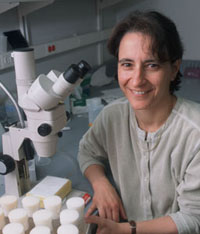
Richard J Adams serves as a University Lecturer in the Department of Physiology, Development and Neuroscience at the University of Cambridge, specializing in the biophysical mechanisms of embryonic development. His work integrates quantitative analysis with live imaging to dissect cellular dynamics across model organisms including zebrafish and Drosophila.
His research centers on Developmental Biology and Morphogenesis, with particular emphasis on cytoskeletal mechanics, tissue deformation, and force transduction during critical processes like neural tube formation and germ-band extension. Key methodologies include microinjection, high-resolution microscopy, and computational modeling of cell behaviors.
Publication analysis reveals a consistent trajectory from 2007-2015 focused on quantifying mechanical forces in morphogenesis. His work demonstrates how microtubule networks direct actomyosin function during tube formation, how extrinsic tensile forces drive germ-band extension, and how supracellular organization governs dorsal closure. This research bridges molecular-scale cytoskeletal dynamics with tissue-level shape changes, establishing fundamental principles of embryonic patterning.