معرفی
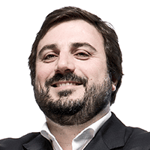
Ricardo Daniel Santos Faro Marques Ribeiro is an Associate Professor at Iscte - Instituto Universitário de Lisboa, where he is affiliated with the Department of Information Science and Technology (ISTA) within the School of Technologies and Architecture. He is also a researcher at INESC-ID Lisboa, focusing on Human Language Technologies and speech and language processing. He has held leadership roles including Director of the Master's and Bachelor's in Computer Engineering and Coordinator of the Artificial Intelligence scientific area.
- PhD in Informatics and Computer Engineering, Instituto Superior Técnico (2011)
- Master's in Electrical and Computer Engineering, Instituto Superior Técnico (2003)
- Bachelor's in Mathematics/Computer Science, University of Beira Interior (1996)
His research centers on artificial intelligence, with a strong emphasis on natural language processing, text mining, computational linguistics, and machine learning. He explores applications in sentiment analysis, hate speech detection, document summarization, information extraction, and generative AI, particularly in domains such as legal texts, social media, and customer feedback.
The recent publications reflect a consistent trend in leveraging advanced NLP techniques, especially pretrained language models and deep learning, to solve real-world problems in text classification, information extraction, and domain-specific understanding (e.g., legal, medical, financial). The work spans both Portuguese and multilingual contexts, emphasizing practical deployment and automation.
He has successfully co-supervised three doctoral students and over 70 master’s students, with several currently in progress. He has led significant research projects, including European-funded initiatives like RAGE and national projects with the Ministry of National Defense and the Supreme Court of Justice, demonstrating strong grant acquisition and management capabilities.
Ricardo Ribeiro leads the Artificial Intelligence scientific area at Iscte and has directed multiple academic programs. He also contributes to the broader scientific community through participation in major conferences (IJCAI, ECAI, LREC) and editorial work in computational processing of Portuguese.