معرفی
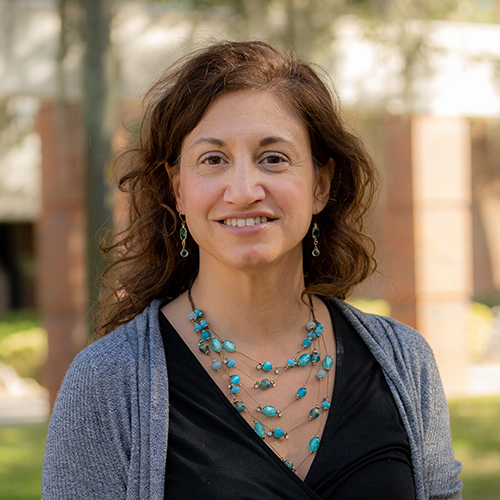
Rachel Arnow-Richman holds the inaugural Gerald A. Rosenthal Chair in Labor & Employment Law as Professor of Law at the University of Florida Levin College of Law. Previously, she served as Chauncy Wilson Memorial Research Professor and Director of the Workplace Law Program at University of Denver Sturm College of Law, with additional faculty appointments at University of Colorado, Fordham, Temple, and Texas A&M Law Schools. Her expertise spans labor and employment law and contracts, with significant contributions to workplace policy reform.
Her educational background includes:
- B.A. from Rutgers University
- J.D. from Harvard Law School
- LL.M. from Temple University School of Law
Professor Arnow-Richman's research critically examines at-will employment systems, noncompete agreements, and harassment law through the lens of the #MeToo movement. She pioneers reforms for mandatory termination notice and severance pay, while analyzing corporate governance shifts driven by social movements. Her work bridges doctrinal analysis with practical policy solutions for modern workplace challenges.
Recent publications demonstrate evolving focus from foundational employment contract theory (2010-2016) toward contemporary crises including pandemic-era layoffs (2021) and MeToo's impact on executive contracts (2022). Her scholarship consistently addresses power imbalances through structural reforms to employee mobility and termination rights, with increasing emphasis on interdisciplinary approaches to workplace law.
Her notable recognition includes:
- Inaugural Gerald A. Rosenthal Chair in Labor & Employment Law
As past chair of both the Labor & Employment Law Section and Contracts Section of the American Association of Law Schools, she shaped national academic discourse. Professor Arnow-Richman co-drafted the Uniform Restrictive Employment Agreement Act for the Uniform Law Commission and leads UF Law's Converge for Impact project, which develops innovative workplace law solutions through stakeholder collaboration. Her judicial clerkship with the New Jersey Supreme Court and private practice at Drinker, Biddle and Reath LLP inform her practitioner-oriented scholarship.
The Converge for Impact initiative under her direction drives policy change through research translation, legislative drafting, and multi-stakeholder engagement to address systemic employment law challenges in real-world contexts.