معرفی
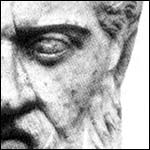
Plato (429–347 BCE) was a preeminent ancient Greek philosopher and founder of the Academy of Athens, the first institution of higher learning in the Western world. As a student of Socrates and teacher of Aristotle, he shaped Western philosophy through his dialogues exploring ethics, politics, metaphysics, and epistemology. His works, including The Republic, Phaedo, and Apology, form foundational texts in philosophy.
Education & Background: Born into a noble Athenian family, Plato was influenced by Socrates' teachings until the latter's execution (399 BCE), which profoundly impacted his philosophical trajectory. He later traveled widely before establishing the Academy.
Research Interests: Plato's philosophy centers on the Theory of Forms, the immortality of the soul, justice, and the ideal state. His dialogues blend dialectical inquiry with mythological allegories, challenging readers to engage actively with philosophical concepts.
Legacy: The Academy, his school, educated thinkers like Aristotle and thrived for centuries. His works influenced later philosophers (e.g., Kant, Hegel) and remain central to philosophical discourse. Though no explicit awards are recorded, his enduring impact constitutes a legacy of intellectual achievement.
Advising & Influence: Notable student Aristotle became a rival successor to the Academy. Plato's dialogues also served as pedagogical tools, shaping generations of philosophers. The Academy functioned as a collaborative intellectual hub, fostering debates on ethics, politics, and metaphysics.