معرفی
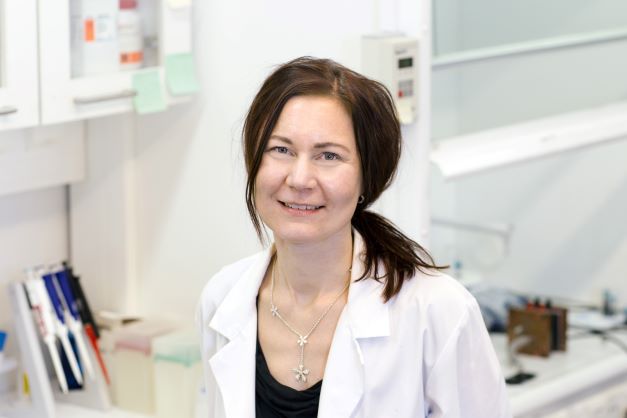
Philippe Knauth serves as Professor of Materials Chemistry at Aix Marseille University, conducting research at the MADIREL laboratory (UMR 7246) and co-leading the International Laboratory "Ionomer Materials for Energy" (LIME). His academic career centers on advanced materials development for electrochemical energy systems, with institutional affiliations focused on solid-state ionics and sustainable energy solutions.
Knauth's research expertise spans Solid State Ionics, Ionic Conduction at Interfaces, Ionomers, Nanostructured and Composite Materials, and Materials for Batteries and Fuel Cells. His work emphasizes fundamental interfacial phenomena in ion-conducting materials, particularly addressing challenges in ionic mobility, membrane stability, and electrode-electrolyte interactions. This research drives innovation in next-generation energy storage and conversion devices through molecular-level material design.
Analysis of Knauth's 15 most recent publications (2023-2025) reveals three dominant research thrusts: (1) Development of anion exchange ionomers and membranes with enhanced alkaline stability for fuel cells, (2) Engineering of carbon quantum dot-based electrocatalysts for oxygen reduction, and (3) Design of protective ionomer layers for battery electrodes. His publications consistently integrate nanomaterials synthesis, electrochemical characterization, and device integration, with growing emphasis on sustainable materials derived from biomass.
No scientific awards were documented in the source materials.
Information regarding student advising, research grants, or teaching responsibilities was not provided in the available documentation.
Knauth maintains active research operations through the MADIREL laboratory at Aix Marseille University and the International Laboratory LIME, which facilitates Franco-international collaboration on ionomer materials. His team specializes in electrochemical synthesis, membrane characterization, and nanomaterials engineering for energy applications, with infrastructure supporting thin-film deposition, electrochemical testing, and materials analysis.