معرفی
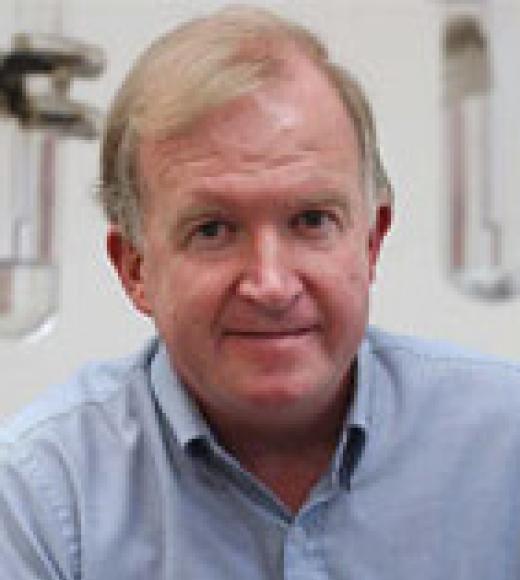
Dr. Philip Patrick Power is a Distinguished Professor in the Department of Chemistry at the University of California, Davis, where he has served since 2005. Previously, he held positions as Professor (1988-2005), Associate Professor (1985-1988), and Assistant Professor (1981-1985). His academic foundation includes a B.A. in Chemistry from University of Dublin (1974), a D. Phil. in Organometallic Chemistry from University of Sussex (1977), and postdoctoral training at Stanford University (1978-80).
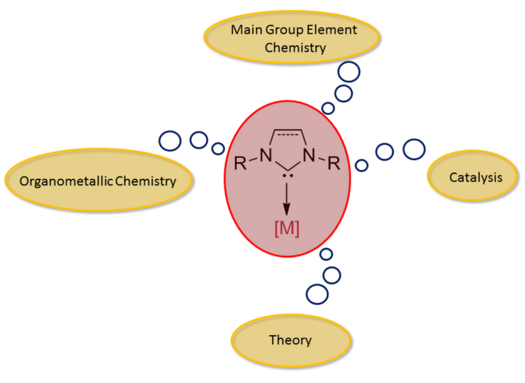
Dr. Power's research specializes in Main Group and Transition Metal Chemistry, particularly the synthesis and reactivity of heavier group 14 elements (Si, Ge, Sn, Pb). His pioneering work with sterically demanding terphenyl ligands has enabled the stabilization of otherwise highly reactive species, revealing unprecedented bonding situations. His group's discoveries of multiple bonds between heavy main group elements have fundamentally challenged previous assumptions in chemical bonding theory.
Analysis of Dr. Power's recent publications reveals several key research directions: increasing focus on dispersion forces in stabilizing unusual geometries, exploration of main group elements mimicking transition metal-like reactivity (particularly in small molecule activation), and investigation of magnetic properties in low-coordinate transition metal complexes. His work demonstrates how main group elements can activate hydrogen, ammonia, and olefins under ambient conditions.
- ACS Award in Organometallic Chemistry (2012)
- Elected Fellow of the Royal Society of London (2005)
- Elected Fellow of the Royal Society of Chemistry (2005)
- ACS F.A. Cotton Award in Synthetic Inorganic Chemistry (2005)
- Ludwig Mond Medal, Royal Society of Chemistry (2005)
- Degree of Doctor of Science, honoris causa, University of Bath, England (2017)
Dr. Power has mentored numerous graduate students and postdoctoral fellows throughout his career. His editorial leadership includes serving as Editor-in-Chief of Volume 37 of Inorganic Syntheses and co-editing a special issue of Inorganic Chemistry on Advances in Main-Group Inorganic Chemistry. With continuous funding from the National Science Foundation and other agencies, his research program has produced over 530 publications and two influential books on metal amide chemistry.
The Power Lab operates as a collaborative research environment with multiple postdoctoral fellows, graduate students, and visiting scholars from around the world. The lab maintains strong international collaborations with researchers in Japan, Finland, Germany, Canada, Spain, Iran, and England, reflecting the global impact of Dr. Power's work in advancing the frontiers of inorganic chemistry.