معرفی
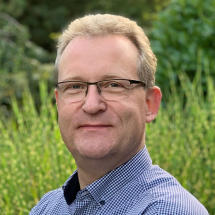
Peter Waaben Thulstrup is an Associate Professor in the Section for Biological Chemistry within the Department of Chemistry at the Faculty of Science, University of Copenhagen. His research focuses on the intersection of bioinorganic chemistry, physical chemistry, and nanotechnology, with particular emphasis on protein and nucleic acid structures and their synthetic modifications as tools to investigate biological chemistry.
Thulstrup's research interests span bioinorganic, inorganic and physical chemistry, with specific focus on understanding the chemistry, function, and structural dynamics of biological macromolecules with particular regard to the role of metal ions. His work encompasses metal ion uptake and regulation in biological systems, peptide and protein (mis-)folding and self-assembly, ordered systems and chirality, and various spectroscopic techniques including circular and linear dichroism, absorbance, fluorescence, and NMR spectroscopy. His laboratory is equipped with advanced instrumentation such as the Jasco J-815 spectropolarimeter, Jasco FP-6300 Spectrofluorometer, and Shimadzu UV-VIS spectrometers.
His recent publications reveal a strong trend toward nanobiotechnology applications, particularly in the development of metal-organic frameworks for hemoglobin delivery, silver nanocluster-based biosensors, and enzyme-loaded microreactors for biomedical applications. His work bridges fundamental bioinorganic chemistry with practical biomedical solutions, demonstrating a consistent focus on spectroscopic characterization of biomolecular systems.
Thulstrup has been actively involved in peer review activities, having served as a reviewer for journals including Inorganic Chemistry, RSC Advances, and Analyst, and as a member of review committees at institutions like the University of Antwerp and University of Copenhagen.
His research group maintains specialized facilities for spectroscopic analysis, including equipment for circular dichroism, fluorescence, and vibrational spectroscopy, along with joint facilities for GMO and radiochemistry. The group's research spans from fundamental studies of protein structure to applied nanotechnology for biomedical applications.