معرفی
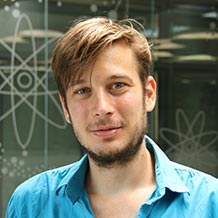
Professor Paul Skrzypczyk is a distinguished theoretical physicist at the University of Bristol's School of Physics, where he leads cutting-edge research in quantum information theory. His work bridges fundamental quantum mechanics with practical applications in quantum technologies. He serves as Principal Investigator for multiple significant research projects and holds the prestigious CIFAR Azrieli Global Scholar position (2022-2024).
Dr. Skrzypczyk's research primarily focuses on quantum nonlocality, measurement incompatibility, and quantum thermodynamics. His investigations explore how quantum theory enables 'nonlocal' effects where actions in one location seemingly affect distant places instantaneously, challenging classical physics understanding. His thermodynamics research examines how traditional thermodynamic laws apply at quantum scales, particularly for small systems far from their original realm of applicability, with implications for future quantum technologies.
His publication record demonstrates consistent high-impact contributions to quantum information science, with recent work spanning quantum measurement theory, quantum resource theories, quantum thermodynamics, and quantum foundations. His research output shows a clear trajectory toward increasingly sophisticated applications of quantum information principles to fundamental physics questions.
Among his notable recognitions is the CIFAR Azrieli Global Scholar award, reflecting his standing in the international quantum research community. His work has generated substantial scholarly attention, with numerous highly-cited publications including the influential 2014 Nature Communications paper on work extraction from individual quantum systems.
Professor Skrzypczyk actively secures research funding, currently leading the "Software Enabling Early Quantum Advantage" project (2023-2025) and previously directing the "Investigating Measurement Incompatibility in Quantum Theory" initiative (2017-2021). His media engagement includes contributions to the widely covered "quantum Cheshire cats" research, which garnered attention across multiple news outlets, blogs, and academic platforms.
As a member of the Bristol Quantum Information Institute, he contributes to one of the UK's leading quantum research centers, collaborating extensively across international networks as evidenced by his diverse research partnerships. His theoretical work provides foundational insights that inform the development of practical quantum technologies.