معرفی
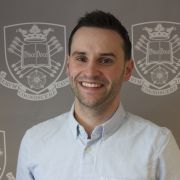
Paul Robinson is an Assistant Professor in the Department of Social Sciences at Northumbria University, actively contributing to criminology and policing research. He is currently accepting PhD students and has a strong publication record in areas such as democratic policing, social media use by police, and organized crime.
Education:
- PhD in Social Studies/Science, Teesside University (awarded 7 May 2021)
- MSc in Criminology, Teesside University
- BSc (Hons) in Criminology, Teesside University
- Post Graduate Certificate in Education in Learning and Teaching (PGCE), Teesside University
His research focuses on the intersection of policing, public accountability, and digital communication. He investigates how police forces use platforms like Twitter during civil unrest and sports events, emphasizing democratic principles and community engagement. His work also extends to organized crime and terrorism financing, where he contributes to policy-oriented academic discourse through special issues and collaborative research.
The recent articles highlight a consistent trend in digital policing, public order management, and democratic accountability. His scholarship combines ethnographic and policy analysis methods, often in collaboration with researchers like L. Ralph and G.A. Antonopoulos. The work spans journals such as Police Practice and Research, Policing: A Journal of Policy and Practice, and Trends in Organised Crime.
Scientific Awards:
- No awards listed in the provided text.
Dr. Robinson advises PhD students and is involved in collaborative research projects, though specific grants are not mentioned. His academic network includes international scholars, and his work is increasingly cited in criminological and policing literature. He is active in editorial roles, including co-editing a special issue on organized crime and terrorism financing.
He is affiliated with Northumbria University’s Social Sciences Department and maintains a presence through ORCID and Scopus. His research output suggests ongoing work in digital policing and criminal justice reform, positioning him as an emerging scholar in contemporary criminology.