معرفی
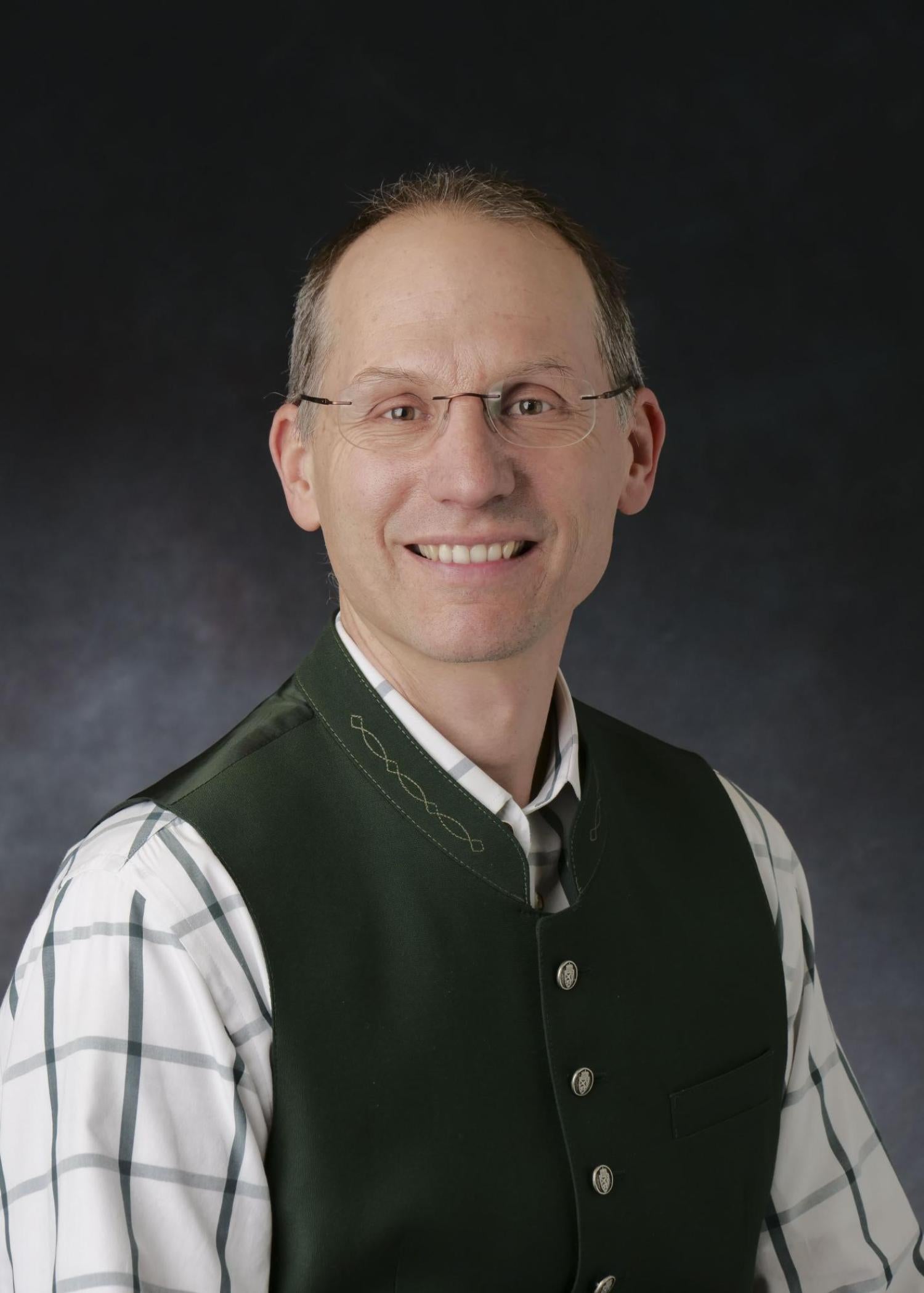
Paul Beale is a Professor in the Department of Physics at the University of Colorado Boulder, where he has been a faculty member since 1984 and currently serves as Chair of the Department. He holds a Ph.D. in Physics from Cornell University (1982) and a B.S. from the University of North Carolina at Chapel Hill (1977). His academic career has been centered at CU Boulder, where he advanced from Assistant to Associate and then to full Professor.
- Ph.D., Physics, Cornell University, 1982
- B.S., Physics, University of North Carolina at Chapel Hill, 1977
Paul Beale's research is in theoretical condensed matter physics, with a focus on statistical mechanics and thermodynamics. His work spans a broad range of topics including phase transitions, critical phenomena, ferroelectrics, hysteresis, grain boundary kinetics, and Monte Carlo methods. He has made significant contributions to the exact calculation of energy distributions in the two-dimensional Ising model and developed a novel class of scalable parallel pseudorandom number generators based on Pohlig-Hellman exponentiation ciphers. His research integrates analytical theory, computational modeling, and applications in materials science and complex systems.
His recent publications reflect a strong trend in computational and theoretical physics, particularly in developing robust algorithms for simulation and advancing fundamental understanding of phase behavior in soft and condensed matter systems. His work on pseudorandom number generation has implications for high-performance computing and statistical sampling. He has also contributed to physics education research, focusing on curriculum transformation and quantum mechanics instruction.
Notable scientific contributions include:
- Co-author of the textbook Statistical Mechanics (with R.K. Pathria), a standard graduate-level reference.
- Development of exact methods for the 2D Ising model partition function.
- Innovation in scalable pseudorandom number generation for parallel computing.
Paul Beale has advised numerous students and collaborated widely, though specific advisees are not listed. He has held significant administrative roles, including Director of the Honors Program and Associate Dean for Natural Sciences. He maintains active research through publications, code development, and academic leadership, with no indication of retirement.
He is associated with the following labs and research groups:
- Condensed Matter Laboratory (former Director, 1999–2001)
- Statistical Physics and Computational Modeling Group (implied through research topics and code repositories)