معرفی
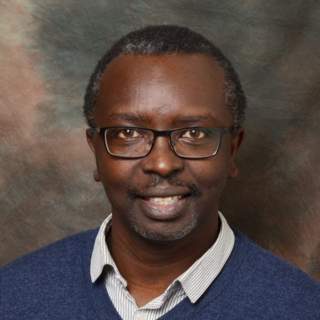
Nikola Nizamis is a Lecturer in Asset Management & Maintenance Engineering, affiliated with a College of Engineering. His work bridges engineering education, humanitarian technology, and educational innovation. He is actively involved in research that promotes sustainability, integrity, and inclusive learning, particularly in underserved communities.
- Lecturer in Asset Management & Maintenance Engineering
- Active in engineering education and humanitarian technology
- Collaborates on refugee education and sustainable development projects
His research interests center on engineering education, with a focus on humanitarian engineering, integrity in training, and innovative pedagogical models such as challenge-based and participatory learning. He explores how comparative judgment and self-reflection can assess competence in complex educational settings, particularly those addressing climate change and social equity.
The recent publications highlight a strong trend toward educational innovation in humanitarian contexts, especially in refugee education (e.g., Jordanian camps) and mobile learning environments. His work integrates technology, ethics, and social impact, often using frameworks from computer science and engineering to solve educational and societal challenges. Topics include participatory video for community input, integrity in engineering curricula, and institutional support for teaching innovation.
Scientific Awards:
- 1st Prize - Tech 4 Sustainability - Educating for Sustainability - Siemens (2023)
Nikola Nizamis has been involved in advising and collaborative research, particularly in projects related to humanitarian engineering education and sustainable teaching practices. While no formal students are listed, he collaborates extensively with colleagues such as A. Martinetti, P.K. Chemweno, and N. Petrová. His work has been supported through academic grants and institutional initiatives focused on innovation in higher education and sustainability. He contributes to conference proceedings in CDIO and IEEE, indicating strong engagement with global engineering education communities.
He is associated with research teams working on educational innovation, refugee integration, and sustainable engineering education. These teams operate at the intersection of technology, ethics, and pedagogy, aiming to develop effective, equitable, and scalable solutions for complex educational challenges in both developed and underserved contexts.
حوزههای پژوهشی