معرفی
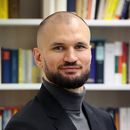
Niklas Venema serves as Junior Professor for Communication and Media Change at the Institute of Communication and Media Studies at Leipzig University since April 2022. His research and teaching focuses on journalism, media policy, and political communication from a historical perspective, with current emphasis on counterpublics in political and media change.
- Current position: Junior Professor for Communication and Media Change at Leipzig University (since April 2022)
- Previous position: Research Associate at Freie Universität Berlin (2016-2022)
- Education: Doctorate in Communication and Media Studies from Freie Universität Berlin (2021)
- Research focus: Historical perspective on journalism, media policy, political communication, and counterpublics
His research examines past upheavals and their societal conditions and consequences, focusing on journalism, media policy, political communication, and the public sphere. Venema's work analyzes changes in structures and actor constellations of public communication, as well as the academic reflection of these changes through the history of communication and media studies. Methodologically, his research combines historical source work with social science qualitative methods.
His current research project "Public Sphere and Labor Movement: Democratic Discourse as Ideal and Danger" (2024-2027), funded by the Gerda Henkel Foundation, examines the conflictual relationship between the labor movement and media public in the 19th and early 20th centuries, focusing on German Social Democracy in an international context.
Scientific Awards
- Nachwuchsförderpreis Kommunikationsgeschichte (Early Career Award in Communication History) - 2022, awarded by the German Society for Communication and Media Studies
Venema's teaching focuses on the change of public sphere, journalism, and media system structures from the 19th century to the recent past. His courses include "The Media System of the GDR and the Transformation after 1989" and "Visual Political Communication using the Example of Right-Wing Populism." His research-oriented teaching introduces the application of qualitative social science methods for communication history questions.
His team consists of two project staff members (including PhD scholarship holder Hilke Hammer) and one student assistant, with additional support from the Communication Studies office.