معرفی
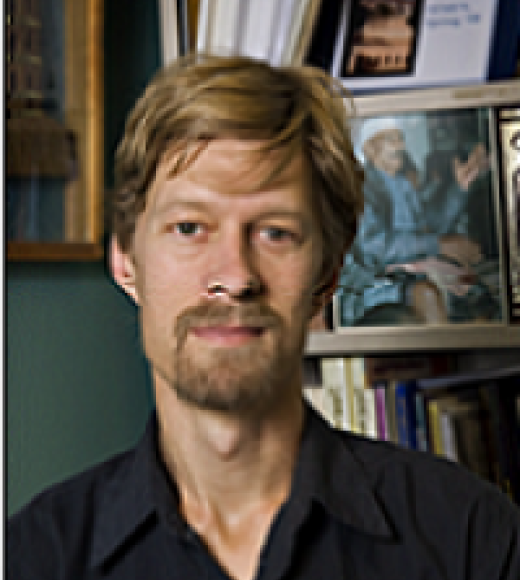
Mustafa Tuna is an Associate Professor at Duke University, holding joint appointments in the Departments of Slavic and Eurasian Studies and History. He is affiliated with the Duke Islamic Studies Center (DISC). His research focuses on the intersection of Islam, modernity, and imperial dynamics, particularly in Russia, Central Asia, and Turkey. Tuna earned his Ph.D. from Princeton University in 2009.
His major works include *Imperial Russia's Muslims: Islam, Empire, and European Modernity, 1788-1917* (Cambridge University Press, 2015), which examines the transformation of Muslim communities under imperial rule. Current projects explore encounters between Sunni Islamic and European secular thought, and the urbanization of cob-house villages near Ankara. He has also translated and critically edited Bediuzzaman Said Nursi's *Al-Mathnawi al-Arabi al-Nuri* (Luminous Couplets).
- Teaches courses like *Imperial Russia 1700-1917*, *Between Moscow, Beijing, and Delhi: Narratives of Europe and Asia*, and *Islam in Asia*.
- Public engagement includes podcasts on Nursi's works, commentaries on Islamophobia, and video lectures on Muslim populations in Russia.
His research emphasizes ontological and epistemological intersections between Islamic and secular thought, with a focus on modernity's challenges to Muslim societies. Tuna’s interdisciplinary approach spans history, religious studies, and postcolonial theory.