معرفی
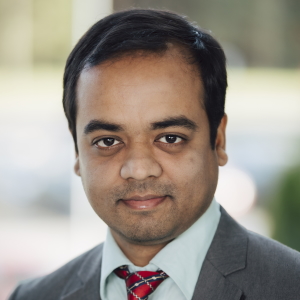
Dr. Mohammed Mazumder is a faculty member at Newcastle Business School, Northumbria University, where he has been contributing since January 2020. He leads the MSc Forensic Accounting programme and serves as the Departmental Research Ethics Lead. He teaches Management Accounting and Analytics at the undergraduate level and Financial Planning and Control at the postgraduate level.
His educational background includes a PhD from Tohoku University and an MBA in Accounting from the University of Dhaka, where he also taught for over ten years. He is a Fellow of the Cost and Management Accountant (FCMA) and a Fellow of the Higher Education Academy (FHEA), reflecting his dual expertise in professional accounting and academic teaching.
Dr. Mazumder’s research focuses on corporate reporting, sustainability accounting, CSR, corporate governance, and forensic accounting, with empirical studies centered on Bangladesh and Japan. His work explores board composition, gender diversity, cybersecurity disclosures, anti-corruption reporting, and SDG disclosures in emerging economies. The research employs discourse analysis, impression management theory, and quantitative methods to assess disclosure quality and governance effectiveness.
His recent publications (2021–2025) reveal a strong trend toward ethical, environmental, and governance-related disclosures in banking and insurance sectors of developing economies. Topics include climate change rhetoric, post-cyber heist disclosures, and SDG reporting, indicating a growing emphasis on transparency and accountability in corporate narratives.
His scholarly contributions have appeared in reputable journals such as Asian Review of Accounting, International Journal of Disclosure and Governance, Journal of Accounting in Emerging Economies, and Business Ethics: A European Review. While no specific awards are mentioned, his publication record in CABS/ABDC-ranked journals reflects significant academic recognition.
Dr. Mazumder actively contributes to academic governance as Research Ethics Lead and programme director. Though no current students are listed, his leadership roles suggest involvement in postgraduate supervision and curriculum development. He has not indicated part-time status and appears to be a full-time, active academic with no signs of retirement or former staff status.
He is associated with no named research labs or teams, but his work is highly interdisciplinary, bridging accounting, ethics, sustainability, and governance. Future research directions likely include expanding comparative studies between Japan and South Asia, deepening analysis of SDG disclosures, and exploring digital risk reporting in financial institutions.