معرفی
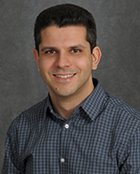
Michalis Polychronakis is a Professor in the Computer Science Department at Stony Brook University. He received his BSc (2003), MSc (2005), and PhD (2009) degrees in Computer Science from the University of Crete, Greece, while working as a research assistant in the Distributed Computing Systems Lab at FORTH-ICS. Prior to joining Stony Brook, he was an associate research scientist at Columbia University.
His research focuses on computer security, with particular emphasis on system security, network security, privacy, and anonymity. He has made significant contributions to memory safety, software vulnerabilities, malware analysis, and internet censorship measurement. His work spans both theoretical foundations and practical implementations, often resulting in open-source tools that advance the state of the art in security research.
Polychronakis's recent publications reveal a clear trajectory toward addressing modern security challenges in cloud environments, container security, and privacy-preserving technologies. His research increasingly focuses on memory safety issues, with multiple papers on protecting against memory corruption vulnerabilities. He has also made substantial contributions to understanding and measuring internet censorship systems, particularly China's Great Firewall. His work often combines static and dynamic analysis techniques to develop practical security solutions.
- Best Paper Award, 6th International Conference on Malicious and Unwanted Software (MALWARE), 2011
- Best Student Paper Award, 14th Information Security Conference (ISC), 2011
- Most Influential DIMVA Paper 2004-2008 Award
- 1st place winner, NYU CSAW 2014 Applied Research Competition
- 1st place winner, NYU CSAW 2013 Applied Research Competition
Professor Polychronakis actively mentors graduate students through the MS Project course (CSE523/524) and has served as advisor for numerous PhD and Master's students. His research has been supported by various grants, though specific details aren't provided in the available documentation. He teaches advanced security courses including Offensive Security (CSE 363), Network Security (CSE 508), and System Security (CSE 509), emphasizing hands-on experience with real-world security challenges.