معرفی
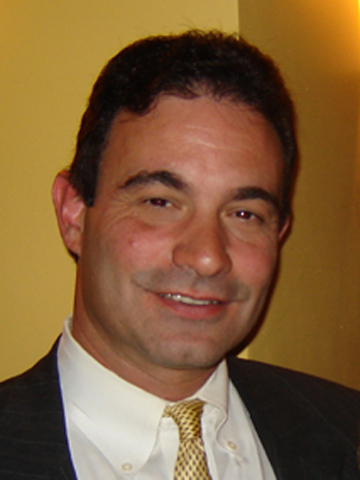
Michael Sperazza serves as a Research Assistant Professor in the Department of Geosciences at Stony Brook University, where he has been a faculty member since 2008. His work bridges paleoclimatology, geology, and anthropological studies to investigate climate change impacts on human evolution and civilizations.
His academic credentials include:
- B.S. (1980) from Leeds School of Business, University of Colorado
- M.A. (2000) in Anthropology from University of Montana
- Ph.D. (2006) in Geosciences from University of Montana
Sperazza's research focuses on paleoclimatic change during the Pleistocene and Holocene epochs, specializing in methodological development of climate proxies. His work examines grain size analysis, quantitative X-ray diffraction, and magnetic properties in lacustrine systems. Current projects investigate Flathead Lake's glacial history in Montana, climate-human evolution dynamics in Kenya's Turkana Basin through collaboration with the Leakey family, and sea-level rise impacts on New York's Shinnecock Bay communities. His interdisciplinary approach integrates sedimentology, GIS mapping, and field-based climate reconstruction.
His 15 most recent publications (2002-2008) demonstrate consistent innovation in paleoclimate proxy development, primarily centered on Flathead Lake sediment records. The research emphasizes high-resolution analytical techniques to reconstruct rapid climate transitions, glacial dynamics, and megadrought events during the Pleistocene-Holocene transition, with strong methodological contributions to grain size analysis and magnetic property applications.
Scientific Awards: No awards were documented in the provided text.
Advising and grants are not explicitly detailed, but his research serves as an educational platform for students in field methods and data analysis. Collaborations span Stony Brook's Geosciences, Anthropology, and Marine Science departments, Rutgers University, and the Turkana Basin Institute, indicating multi-institutional grant involvement.
He operates within Stony Brook's Department of Geosciences infrastructure, utilizing department labs for sediment analysis. His Turkana Basin work involves GIS database construction for hominid localities and tephrochronology, while Shinnecock Bay research integrates hydrologic and cultural impact assessments through community-engaged science.