معرفی
Michael Schreyach is a Professor in the Department of Art and Art History at Trinity University in San Antonio, Texas. His academic work focuses on modern and contemporary art, with particular expertise in abstract expressionism and the philosophical dimensions of painting. Schreyach holds a Ph.D. from the University of California, Berkeley and an M.A. from the University of Texas at Austin, establishing a strong foundation for his scholarly contributions to art historical discourse.
- Ph.D., University of California, Berkeley
- M.A., University of Texas at Austin
Schreyach's research explores how visual effects in paintings are technically conveyed, culturally operated, and historically situated, along with their philosophical interpretations. His work spans the history of photography, the relationship of art and politics from 1930-1970, methods of art history, and phenomenology. His teaching portfolio is comprehensive, covering Modernism in the Visual Arts, History of Photography, Nineteenth & Twentieth Century Art, Contemporary Art Since 1945, Theories and Practice of Art History, and Renaissance to Modern Art.
His publication record demonstrates significant scholarly impact, particularly through his books Pollock's Modernism (2017) and Totality: Abstraction and Meaning in the Art of Barnett Newman (2023). His recent articles reveal a consistent focus on Barnett Newman and Jackson Pollock, examining spatial dynamics, viewer experience, and the philosophical implications of abstract painting. The thematic coherence across his work shows particular interest in how modernist painting creates meaning through visual and material properties rather than representational content.
- 2023: Totality: Abstraction and Meaning in the Art of Barnett Newman
- 2017: Pollock's Modernism
- 2017: History and Desire: A Short Introduction to the Art of Cy Twombly
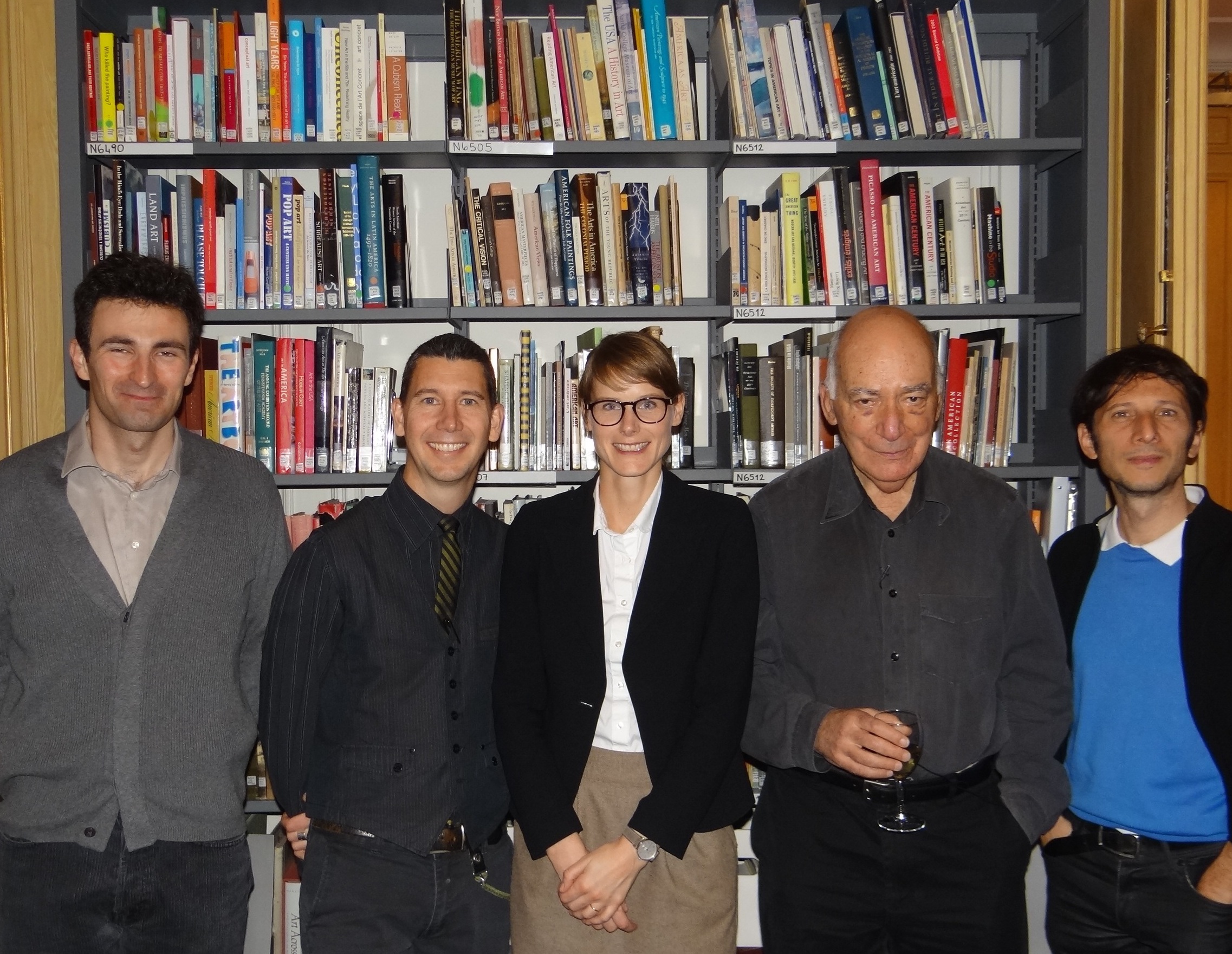
Schreyach has been recognized by Trinity University through faculty stipends and promotions, with announcements in 2019 and 2020 indicating his active research profile. His participation in the Terra Foundation for American Art event in Paris (2014), where he conversed with Michael Fried about post-war American art, demonstrates his standing within the international art historical community. His work bridges historical analysis with philosophical inquiry, contributing significantly to our understanding of modernist painting's enduring significance.