معرفی
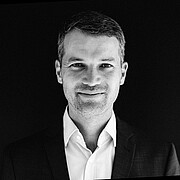
Dr. Michael Schlaile is a Research Fellow at Hochschule für Gesellschaftsgestaltung and Principal Investigator for the BMBF-funded project 'The Cultural Evolution of Sustainability Transitions' at the University of Hohenheim's Faculty of Economics and Administrative Sciences. His work integrates evolutionary economics, cultural dynamics, and sustainability science within the Department of Catholic Theology and Business Ethics.
His academic background includes:
- Doctorate (Dr. oec.) from University of Hohenheim (2019) on 'Memetics and Evolutionary Economics – To Boldly Go Where no Meme has Gone Before' (summa cum laude)
- Master of Science in International Business and Economics from University of Hohenheim (2012)
- Diplom-Betriebswirt (DH) in Banking from University of Cooperative Education, Stuttgart (2008)
Dr. Schlaile specializes in applying memetics to economic systems, examining how cultural evolution drives sustainability transitions and ethical business practices. His research bridges theoretical frameworks from evolutionary economics with practical applications in global leadership and moral economies, particularly through projects analyzing co-design methodologies for systemic change.
He leads interdisciplinary collaborations across institutions including the Leibniz Centre for Agricultural Landscape Research and Cusanus Hochschule, focusing on transformative economic models. His current work investigates cultural transmission mechanisms in sustainability initiatives through the lens of evolutionary epistemology.
As Principal Investigator, he manages BMBF-funded research on cultural evolution dynamics while coordinating knowledge transfer between academic, theological, and agricultural governance spheres. Previous roles include directing the 'New Imaginative Economies' project and establishing degree programs at the Turkish-German University through DAAD funding.
Dr. Schlaile actively contributes to the Working Group 'Co-Design of Change and Innovation' at the Leibniz Centre, developing transdisciplinary approaches to land use governance. His affiliations with the Center for Applied Cultural Evolution and Humanistic Management Center reflect his commitment to integrating evolutionary theory with practical leadership development.