معرفی
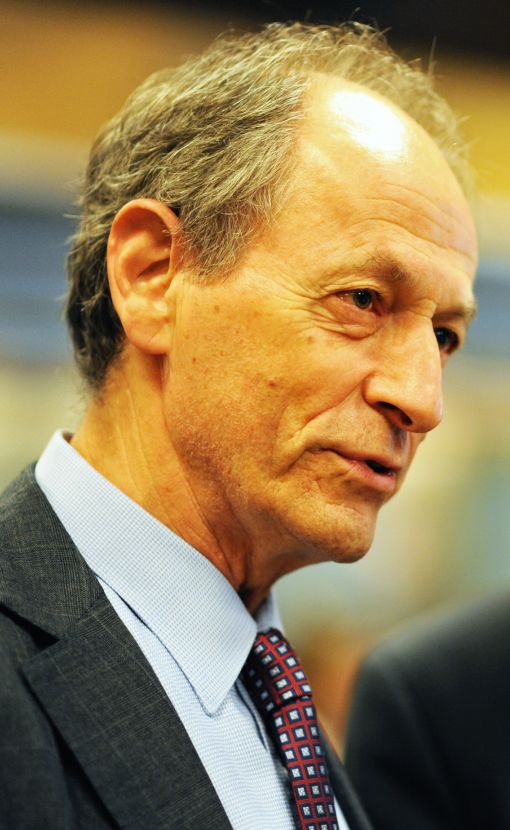
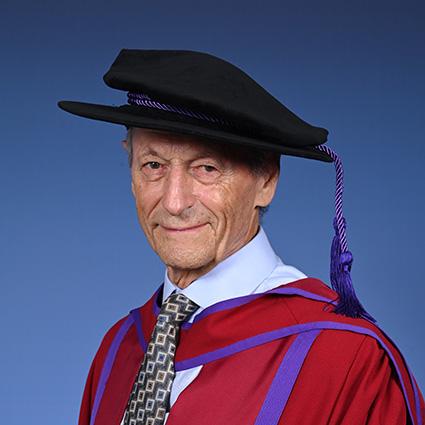
Sir Michael Marmot is a distinguished Research Professor of Epidemiology and Public Health at University College London (UCL), where he serves as Director of the UCL International Institute for Society and Health. He has led groundbreaking research on health inequalities for over 30 years, most notably as Principal Investigator of the Whitehall Studies of British civil servants and leader of the English Longitudinal Study of Ageing (ELSA). His work has had significant international impact, including chairing the Commission on Social Determinants of Health set up by the World Health Organization in 2005.
Professor Marmot's educational background includes:
- MBBS from University of Sydney
- MPH and PhD from University of California, Berkeley
Michael Marmot's research has been devoted to establishing the chain of disease causation from the social environment through psychosocial influences and biological pathways to risk of cardiovascular and other diseases. His work on the Whitehall Studies demonstrated the striking inverse social gradient in morbidity and mortality among British civil servants. He has shown that disease rates change among migrants, with rates increasingly resembling those of their new country over time. His research has particularly focused on high rates of cardiovascular disease and diabetes among immigrants from the Indian subcontinent, linking these to metabolic syndrome related to insulin resistance. Marmot's studies revealed that lower status correlates with higher cardiovascular disease risk, with plasma fibrinogen and metabolic syndrome mediating much of this excess risk. He has produced evidence linking low control at work to increased cardiovascular disease risk and has investigated psychosocial stress pathways involved in metabolic disturbances. His research also addresses the dramatic increase in cardiovascular disease and drop in life expectancy in Russia and other former communist countries of Central and Eastern Europe, with newer work applying these insights to aging populations.
Marmot's publications span several decades and consistently focus on social determinants of health, health inequalities, and epidemiological patterns across different social strata. His work demonstrates how socioeconomic status affects health outcomes through various biological and psychosocial mechanisms, with recent publications increasingly focusing on policy implications and pathways to achieving health equity globally.
Professor Marmot has received numerous prestigious honors and awards for his contributions to epidemiology and public health:
- Knighted by Her Majesty The Queen for services to Epidemiology and understanding health inequalities (2000)
- Foreign Associate Member of the Institute of Medicine (IOM)
- Balzan Prize for Epidemiology (2004)
- Harveian Oration (2006)
- William B. Graham Prize for Health Services Research (2008)
- President of the British Medical Association (2010-2011)
- Honorary fellow of the British Academy
As Principal Investigator, Professor Marmot leads several major collaborative research projects including the Whitehall II Study, Health and Social Upheaval research, the HAPIEE multi-cohort study, and ELSA (English Longitudinal Study of Ageing). His work is supported by significant funding from organizations including the Medical Research Council (MRC). He has collaborated extensively with researchers globally, including Dr. Martin Bobak and Dr. Hynek Pikhart at UCL, Professor Denny Vågero at Karolinska Institutet, Dr. Clyde Hertzman at the University of British Columbia, and many others across Europe, Japan, and Finland.
Professor Marmot directs the UCL International Institute for Society and Health, which serves as a hub for interdisciplinary research on the social determinants of health. He works closely with the Department of Health Scientific Reference Group on tackling health inequalities and has chaired the WCRF/AICR Food, Nutrition and the Prevention of Cancer report. His research team investigates how neighborhood social environments affect health beyond individual characteristics and conducts international comparative work on socioeconomic differences in health and disease.