معرفی
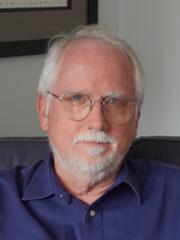
Dr. Michael Barthelmäs is a Postdoctoral Researcher in the Department of Social Psychology at Ulm University, where he has been actively contributing to research since 2017. He earned his PhD in 2022 with a dissertation titled "Antecedents, Boundary Conditions, and Consequences of Emotional Crying: The ABC of Crying" and concurrently completed postgraduate training to become a licensed psychotherapist in cognitive behavioral therapy for adults.
His educational background includes:
- B.Sc. Psychology, Ulm University (2011–2014)
- M.Sc. Psychology, Ulm University (2014–2016)
- Study Abroad, University of Bergen (2015)
Dr. Barthelmäs's research centers on emotional crying, flow experiences, empathy, and psychophysiology. He employs ambulatory assessment methods and mobile technologies—such as Telegram chatbots—to study emotional processes in real-world settings. His work bridges experimental psychology with clinical applications, particularly in cognitive behavioral therapy. He investigates how emotional expressions like crying function socially and how internal states such as flow and empathy are influenced by situational and individual factors.
The analysis of his recent publications reveals a consistent focus on affective and motivational processes. His work integrates psychophysiological measures (e.g., heart rate variability, pupil dilation) with behavioral and self-report data, reflecting an interdisciplinary approach to understanding human emotion and cognition in naturalistic and experimental contexts.
Dr. Barthelmäs has secured competitive funding for his research and teaching initiatives:
- DFG Project (2024–2027): "Towards a Comprehensive Understanding of Essential Antecedents of Flow Experiences: Perceived Meaningfulness of the Activity as Crucial Factor"
- Teaching Project GUWIEL (2025–2027): Funded by Stiftung Innovation in der Hochschullehre, focusing on good scientific practice in empirical teaching
He has advised no formal students listed in the text but has been a research assistant since 2012 and continues to contribute to collaborative research within the Department of Social Psychology. His lab work involves ambulatory assessment, emotion research, and psychophysiological data collection, often in collaboration with Prof. Jörg Keller. The team applies innovative methods such as mobile chatbots and eye-tracking to advance ecological validity in psychological research.