معرفی
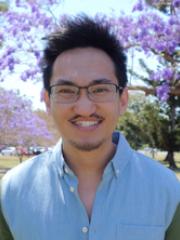
Professor Eric Vanman is a distinguished academic at the University of Queensland's School of Psychology, where he serves as both Professor and Centre Director of the Centre for Research in Social Psychology (CRiSP). His academic journey began with a Ph.D. in social psychology from the University of Southern California (USC) in 1994, followed by post-doctoral work in cognitive and behavioral neuroscience at USC. He held positions at Texas A&M University, Emory University, and Georgia State University (where he rose from Assistant to Associate Professor) before joining UQ.
His research spans several interconnected domains within social neuroscience, with particular emphasis on the neural and physiological mechanisms underlying emotion, intergroup prejudice, and empathy. Vanman's laboratory has pioneered work examining racial prejudice through facial electromyography, demonstrating how subtle muscle activations correlate with discriminatory behavior. More recently, his research has expanded to investigate human-robot interaction from a social psychological perspective, exploring whether we can develop empathy for robots and how social media usage affects psychological well-being.
Vanman's research on crying has gained significant public attention, with his laboratory conducting controlled experiments on the functions of crying and how others respond to tears. His work has been featured on ABC's Catalyst program and SBS's Insight. He has secured substantial funding for his research, including current ARC Discovery Projects on 'Robots as a Social Group' (2023-2026) and 'Reducing social frailty in late adulthood' (2020-2025).
His scholarly output is extensive, with 86 works including 68 journal articles, 8 book chapters, and a seminal book on social psychophysiology. His most recent publications examine online anonymity, human-robot interaction, empathy mechanisms, and the psychology of crying. His research demonstrates a consistent trajectory from studying fundamental social processes like racial prejudice to applying these insights to contemporary issues involving technology and social media.
Professor Vanman actively supervises numerous PhD students across diverse topics including social robots, catfishing behaviors, human-AI relationships, and the psychology of anonymity. His mentorship has produced significant research in social neuroscience, with completed students exploring areas from musical affect to intergroup relations. He maintains an active laboratory equipped with psychophysiological and neuroimaging technology to study social cognitive processes, and collaborates internationally with researchers in Switzerland and Germany on human-robot interaction studies.