معرفی
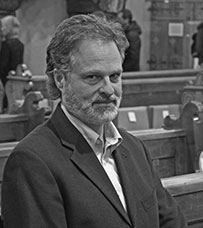
Michael Barbezat serves as a Research Fellow in Medieval and Early Modern Studies at the Institute for Religion and Critical Inquiry within the Faculty of Theology and Philosophy. His work centers on the intersection of religious practice, magic, and societal structures in the Latin Middle Ages, with particular focus on medieval conceptions of the supernatural and afterlife.
Barbezat's research spans Medieval Studies, Religious History, and History of Christianity, examining topics such as medieval divination practices, liturgical magic, heresy punishment, and the materiality of religious concepts. His methodology emphasizes close reading of primary Latin sources from the 12th-13th centuries, revealing how medieval individuals navigated spiritual experiences through frameworks of doubt, desire, and community. Key contributions include analyses of child-mediums in clerical abuse contexts, hyssop's ritual significance, and hellfire's theological materiality.
His publication trajectory (2013-2023) demonstrates evolving sophistication in analyzing medieval communication with the dead and eschatological beliefs. Barbezat consistently interrogates how texts like Peter of Cornwall's Book of Revelations and the Tractatus de Purgatorio sancti Patricii functioned as technologies of the self, while his book Burning Bodies reframes heresy punishment through communal eschatology. This body of work significantly advances understanding of medieval religious experience beyond institutional church history.
Scientific Awards:
- No scientific awards or fellowships are documented in the provided materials.
Academic mentoring activities and grant funding are not specified in the source text, though his Research Fellow position implies involvement in collaborative projects. The Institute for Religion and Critical Inquiry likely provides infrastructure for team-based research in religious studies.
Barbezat's institutional context within the Faculty of Theology and Philosophy facilitates interdisciplinary engagement with critical theory, while his focus on pre-modern religious practices positions him at the forefront of material religion scholarship. His work bridges historical theology, anthropology of religion, and medieval literary studies through meticulous textual analysis.