معرفی
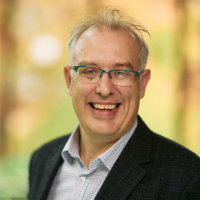
Lukas Meyer is a Full Professor of Philosophy and Head of the Department of Practical Philosophy at the Institute of Philosophy, University of Graz, a position he has held since March 2009. He is also an affiliated professor at the Sant'Anna School of Advanced Studies and has served as a visiting professor at Fudan University, the Federal University of Rio de Janeiro, and the University of Mannheim. His institutional affiliations reflect a strong international presence in philosophy and ethics.
His research centers on justice across time and space, with key interests in intergenerational justice, the ethics of climate change, and historical justice. He was among the first philosophers to serve as a lead author for the Intergovernmental Panel on Climate Change (IPCC), highlighting the policy relevance of his work. His research is supported by major grants, including leadership of the FWF interfaculty doctoral program Climate Change – Uncertainties, Thresholds and Strategies, continuously funded since 2013.
Meyer has made significant scholarly contributions through edited volumes such as Rectifying Historical Injustice (Routledge, 2022), Climate Change and Historical Emissions (Cambridge UP, 2017), and Intergenerational Justice (Oxford UP, 2012). He is a founding editor and editor of the international journal Moral Philosophy and Politics (de Gruyter). His works have been translated into multiple languages, including French, Spanish, Chinese, and Portuguese.
His scientific honors include being a Feodor-Lynen Research Fellow at Columbia University and a fellow at Harvard University’s Ethics Centre. He also served on the ERC 2021 Consolidator Grant Evaluation Panel (SH5), underscoring his role in shaping European research agendas.
Meyer studied philosophy, political science, history, and public international law at the University of Tübingen, Free University of Berlin, Washington University in St. Louis, Yale Law School, and the University of Oxford. He advises doctoral students through the FWF program and collaborates on interdisciplinary climate research. He leads a research team focused on ethical dimensions of climate policy and historical responsibility.