معرفی
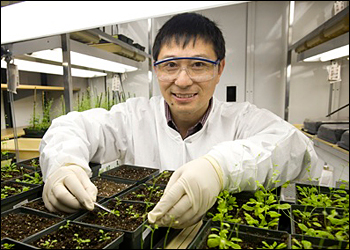
Dr. Meng Xie is an Associate Biologist in the Biology Department at Brookhaven National Laboratory, where he has served since 2020 and currently holds the position of Science Lead for Functional Genomics in the DOE-funded Quantitative Plant Science Initiative (QPSI). Prior to Brookhaven, he conducted postdoctoral research at Oak Ridge National Laboratory and the University of Tennessee-Knoxville, focusing on lignin biosynthesis in poplar.
His educational background includes:
- Ph.D. in Plant Systems Biology from the University of Nebraska-Lincoln (2009-2014), investigating small RNA biogenesis and gene silencing
- B.S. in Food Science and Nutritional Engineering from China Agricultural University (2005-2009)
Dr. Xie's research centers on molecular mechanisms of plant stress responses in bioenergy crops, particularly poplar and sorghum. His group investigates how environmental stresses impact secondary cell wall biosynthesis and flowering time regulation, aiming to bridge the gap between greenhouse and field performance through integrated population studies and functional genomics.
Analysis of his recent publications reveals a strong focus on micronutrient stress responses (iron, zinc), salt tolerance mechanisms, and flowering regulation in bioenergy crops. His work increasingly leverages multi-omics approaches and AI-driven network modeling to predict gene expression under diverse stresses, while developing innovative plant protoplast systems for high-throughput protein interaction studies.
Dr. Xie leads the Functional Genomics component of the DOE's QPSI program, which supports his research on stress-resilient bioenergy crops. His group mentors graduate students and postdoctoral researchers in plant systems biology, utilizing computational approaches combined with genome-wide experimentation to characterize gene functions in poplar and sorghum.
As co-founder of the Quantitative Plant Science Initiative, Dr. Xie established a research program that integrates computational modeling with targeted experimentation. His lab specializes in cell-based platforms for rapid protein-DNA and protein-protein interaction screening, enabling functional characterization in recalcitrant bioenergy crops with long generation times.