معرفی
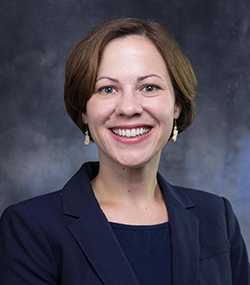
Maureen D. Neumann serves as Professor of Education in the Department of Education within the College of Education and Social Services at the University of Vermont. Her work focuses on transforming pedagogical practices to eliminate systemic disparities in mathematics performance and integrate technological innovations across K-12 classrooms through evidence-based teacher development.
Her academic credentials include:
- Ph.D. in Curriculum and Instruction from University of Washington, Seattle
- M.S. in Applied Mathematics from University of Washington, Seattle
- M.S. in Mathematics from University of Massachusetts, Lowell
Dr. Neumann's research centers on STEM education transformation, with particular expertise in computational thinking integration and gender equity in mathematics instruction. She advocates for developing teachers' deep content knowledge and pedagogical skills to create equitable learning environments. Her work bridges theoretical frameworks like TPACK with practical classroom applications, emphasizing how instructional changes manifest in real educational settings. Current projects explore generative AI's role in enhancing pedagogical practices through her Fulbright-funded research.
Analysis of her 15 most recent publications reveals evolving research trajectories: recent work (2021-2024) prioritizes computational thinking applications in art/math integration and gender equity analysis, while earlier studies established foundations in teacher leadership knowledge and engineering education reform. The corpus demonstrates consistent interdisciplinary connections between computer science, mathematics education, and social justice frameworks.
Her scholarly impact is recognized through:
- Fulbright Global Scholar Award for Computational Thinking and AI research
- CESS Innovation Grant driving licensure portfolio reforms that reduced student stress
- National Science Foundation grant for STEM curriculum alignment frameworks
As an educator, Dr. Neumann mentors graduate students through courses including Dissertation Writing and Introduction to Qualitative Research. Her grant portfolio demonstrates strategic external funding acquisition, particularly the CESS Innovation Grant that directly improved teacher licensure processes. She actively collaborates on cross-institutional teams, notably the NSF-funded STEM curriculum project that influences statewide educational practices.
While no dedicated laboratory is specified, she operates within collaborative research ecosystems including the Child Welfare Training Partnership and Center on Disability and Community Inclusion, applying her expertise to systemic educational challenges through team-based approaches.