معرفی
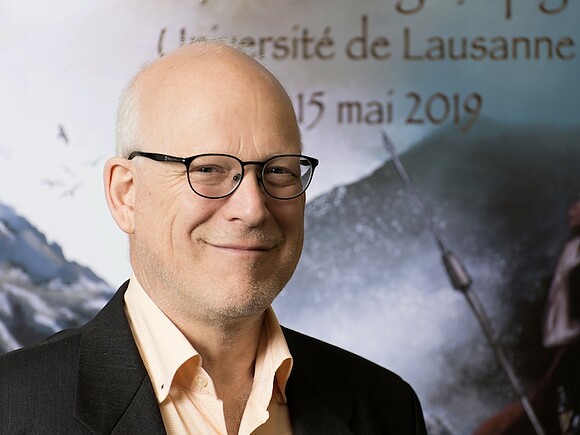
Matthieu Demierre is an Assistant Professor with conditional pre-tenure in Celto-Roman archaeology at the Institute of Archaeology and Ancient Sciences, Faculty of Arts, University of Lausanne (UNIL), a position he assumed on August 1, 2023. He previously served as an archaeologist and first assistant at UNIL and worked with Archeodunum SA and Landarc in Switzerland and France.
His research centers on the Iron Age and Roman religions, the internal organization of Celtic-era towns, and the interpretation of urban spaces. He emphasizes the integration of material objects with their archaeological contexts to derive cultural meaning. His methodological approach combines field analysis, furniture studies, statistical processing, and Geographic Information Systems (GIS). He is particularly active in reconstructing population dynamics during the transition from the late Iron Age to the early Roman period on the Swiss Plateau.
Matthieu Demierre has authored over 50 articles and co-edited significant scholarly works, including a volume on the sacred site of Corent in Auvergne. He is currently preparing a monograph on the Gallic settlement of Vufflens-la-Ville. His fieldwork includes leading excavations at a cave-sanctuary in Millau (2008–2011) and contributing to the study of the oppidum of Corent (2002–2009). In Switzerland, he directs the Vidy-Boulodrome training site, serving as a methodological testing ground for interdisciplinary archaeological research.
He holds a Doctor of Letters from the University of Lausanne (2017), with a dissertation on metal assemblages from a Celtic agglomeration. He is President of the scientific commission of Swiss Archaeology (AS) and coordinates the Reflection Group on the 2nd and 1st centuries BC on the Swiss Plateau (GR 2-1). He is currently collaborating with the Cantonal Archaeological Office of Valais to develop glacial archaeology projects aimed at providing hands-on training for UNIL students.
Matthieu Demierre is actively engaged in academic leadership and research innovation, with a strong commitment to both field archaeology and the training of future archaeologists. His work bridges traditional excavation methods with modern analytical tools to advance the understanding of ancient societies in Western Europe.