معرفی
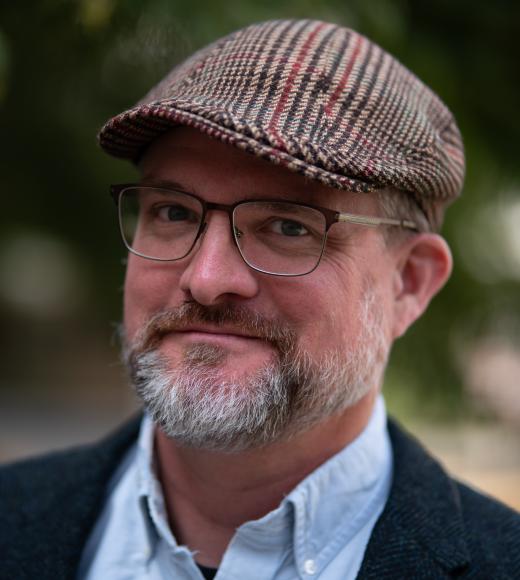
Matthew Stratton is an Associate Professor of English at the University of California, Davis, specializing in the intersections of aesthetics, politics, and intellectual history within twentieth-century literature. His scholarship critically examines how modernist fiction engages with political structures, particularly through concepts of irony, dictatorship, and democratic collapse. He serves as editor of the comprehensive Routledge Companion to Politics and Literature in English (2023) and author of the award-shortlisted monograph The Politics of Irony in American Modernism (2014).
Dr. Stratton's academic foundation includes:
- B.A. from Pitzer College
- Ph.D. from University of Wisconsin-Madison
His research centers on political imagination in Anglo-American modernism, analyzing how literary representations of dictatorship challenge democratic norms. Key interests include the role of irony in political thought, aesthetic strategies in depression-era literature, and the historical construction of concepts like citizenship and enslavement. His work bridges literary analysis with political theory to reveal how cultural production shapes political consciousness across historical periods.
Stratton's publication trajectory demonstrates sustained engagement with modernism's political dimensions. Recent scholarship (2020s) investigates race, gender, and state formation through figures like Dorothy Parker, while earlier work (2010s) explored irony's function in American fiction and Nietzschean aesthetics in Greenwich Village. A unifying thread examines how literary form mediates political perception, particularly regarding crises of judgment in democratic societies.
His scholarly impact has been recognized through:
- Shortlisting for the 2015 MSA Book Prize by the Modernist Studies Association
- UC Davis Distinguished Teaching Award for Undergraduate Teaching
Committed to inclusive pedagogy, Stratton actively supports first-generation college students through UC Davis's First-Generation Initiative. His teaching excellence has been formally acknowledged, though specific grant details remain unpublicized. As a mentor, he guides students in analyzing literature's political dimensions while developing critical frameworks for understanding aesthetic strategies in historical contexts.