معرفی
Dr. Mary Valante is a Professor in the Department of History within the College of Arts and Sciences at Appalachian State University. She serves as the History Graduate Student Advisor and teaches a range of courses focused on medieval history, particularly specializing in Viking studies and early medieval Ireland.
Dr. Valante completed her Ph.D. in Medieval History with a minor in Archaeology at Pennsylvania State University. Her academic training also includes specializations in Roman History, Irish Studies, and multiple languages relevant to medieval scholarship.
Dr. Valante's research focuses on what she describes as 'the supposed Dark Ages,' with particular emphasis on Vikings and 'the Celtic Fringe.' She states: 'I love to work on things that may seem marginal to others. Nothing could be further from the truth, though!' Her work explores Viking settlements in Ireland, medieval Irish politics, and cultural interactions between Vikings and Irish populations. Rather than treating these as peripheral topics, she demonstrates their centrality to understanding early medieval Europe through the analysis of textual primary sources, material culture, and experiential learning approaches.
Analysis of Dr. Valante's publication record reveals a consistent focus on Viking-Irish interactions spanning two decades, with publications ranging from economic and legal systems ('Taxation, Tolls and Tribute,' 1998) to settlement patterns ('Vikings in Ireland,' 2008), political geography ('Fleets, forts,' 2015), and unconventional social topics ('Castrating Monks,' 2013). Her work demonstrates increasing interdisciplinary approaches that combine historical analysis with archaeological evidence.
- Vikings in Ireland: Settlement, Trade and Urbanization (2008)
- Fleets, forts and the geography of Toirdelbach Ua Conchobair's bid for the high-kingship (2015)
- Family Relics and Viking Kingship in Ireland (2013)
- Castrating Monks: Vikings, Slave Trade and the Value of Eunuchs (2013)
As History Graduate Student Advisor, Dr. Valante provides guidance to graduate students while maintaining an active research agenda. Her teaching philosophy emphasizes helping students 'learn what studying textual primary sources, material culture, and using experiential learning can teach us about life in the Middle Ages.' Although specific grant information isn't provided in the available text, her sustained publication record suggests successful research funding throughout her career.
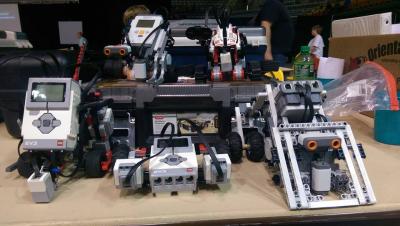
While no formal research lab is mentioned, Dr. Valante's interest in experiential learning is evident in her personal involvement with middle school robotics projects, suggesting she values hands-on approaches to complement traditional academic research.