معرفی
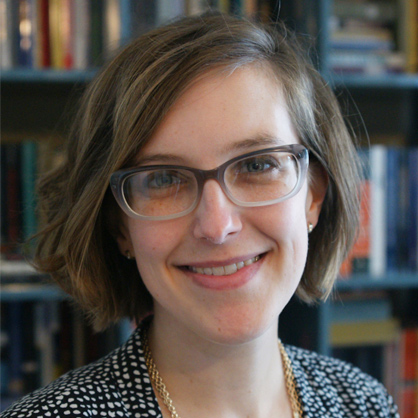
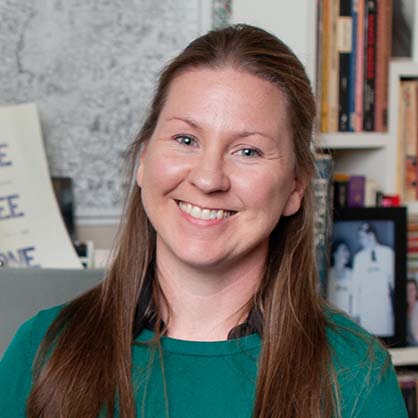
Mary Isbell serves as Associate Professor of English and Assistant Dean for Student Recruitment and Retention at the University of New Haven's College of Arts and Sciences. She holds a Ph.D. in English from the University of Connecticut (2013) and specializes in nineteenth-century literature, digital humanities, and open educational practices.
Her research spans Nineteenth-Century Literature and Culture, Victorian Studies, Maritime Theater History, and Digital Humanities. She pioneers innovative approaches to literature pedagogy through student-selected texts and open educational resources, challenging traditional reading lists while maintaining scholarly rigor. Her work bridges historical scholarship with contemporary digital tools, particularly through projects like WonderCat that reimagine reader engagement.
Analysis of her recent publications reveals a consistent focus on democratizing literary access through technology. Her scholarship increasingly emphasizes student agency, open pedagogy, and alternative recommendation systems that move beyond algorithmic prediction. The intersection of maritime performance history and digital reconstruction forms another distinctive thread, demonstrating how historical practices inform modern educational technology.
- Bucknall Excellence in Teaching Award recipient
- Davis Educational Foundation grant for innovative course materials
- Rebus Community Supplemental Resources Certificate program facilitator
Dr. Isbell leads the Open Pedagogy Project and The Connected Core initiative, collaborating with faculty across disciplines to integrate humanities into professionally oriented curricula. Her WonderCat database project involves students as co-creators in building a relational system for sharing reading experiences. She has secured significant grant funding including the Davis Educational Foundation support for faculty fellows developing student-focused course materials, and directs efforts to transform humanities texts through open editing practices.
Her laboratory for innovation exists at the intersection of digital humanities and pedagogy, where she partners with engineering students to model historical ships and develop educational technologies. The Digital Humanities Lab she developed emphasizes student-driven research projects, moving beyond traditional faculty-led models to foster independent scholarly exploration through independent studies and summer research fellowships.