معرفی
Mark T. Gladwin, MD is the Dean of the University of Maryland School of Medicine and Vice President for Medical Affairs at the University of Maryland, Baltimore, appointed in August 2022. He holds the John Z. and Akiko K. Bowers Distinguished Professor position and maintains primary appointments in Medicine with secondary appointments in Physiology. As an active physician-scientist, Dr. Gladwin leads research in heart, vascular, and lung medicine while overseeing the academic and clinical missions of the medical school.
Dr. Gladwin's educational journey includes:
- Undergraduate and Graduate: University of Miami Honors Program, BS and MD, Medical Education, 1991
- Postgraduate: Oregon Health Sciences University (OHSU), Internship and Residency, Internal Medicine, 1994
- Oregon Health Sciences University, Chief Resident, Internal Medicine, 1995
- Warren G. Magnuson Clinical Center, Critical Care Fellow, National Institutes of Health, 1996
- University of Washington, Pulmonary-Critical Care Fellow, 1998
- Warren G. Magnuson Clinical Center, Senior Research Fellow, Critical Care Medicine, 2000
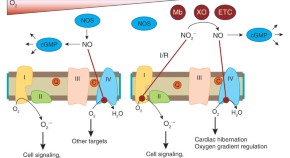
Dr. Gladwin's research focuses on nitrite biology, sickle cell disease, pulmonary hypertension, and carbon monoxide poisoning. His groundbreaking work established nitrite as a biological signaling molecule regulating hypoxic responses, blood pressure, and mitochondrial function. He characterized hemoglobin and myoglobin as nitrite reductases producing nitric oxide under hypoxia, with his 2003 Nature Medicine paper cited over 1,800 times. His research on hemolysis-associated endothelial dysfunction described a novel disease mechanism in sickle cell disease, malaria, and other hemolytic conditions where plasma hemoglobin scavenges nitric oxide.
Analysis of Dr. Gladwin's publication record reveals consistent contributions across hematology, vascular biology, and molecular therapeutics. His work bridges basic science discoveries with clinical applications, particularly in developing nitrite-based therapies for pulmonary hypertension, metabolic syndrome, and heart failure. The publications demonstrate progression from fundamental biochemical discoveries to clinical trial implementation, with recent work expanding into genomics and large-scale population studies through NHLBI TOPMed Program collaborations.
Dr. Gladwin's scientific honors include:
- Achievement Medal, US Public Health Service, NIH (1999)
- NIH Fellows Award for Research Excellence (2000)
- Clinical Center Director's Award (2002)
- Chest Foundation Governors Community Service Award (2004)
- NIH Director's Award for Mentoring (2006)
- NIH Merit Award (2006)
- American Thoracic Society Recognition Award (2013)
- Distinguished Professor at University of Pittsburgh (2014)
- Chancellor's Distinguished Research Award (2017)
- American Heart Association Distinguished Scientist (2020)
As a principal investigator, Dr. Gladwin currently leads two R01 awards, a P01 award, and a clinical trials U award. He has served as PI for multiple multicenter phase II-III clinical trials in sickle cell disease, including the DeNOVO trial of NO therapy, Walk-PHASST trial of sildenafil, EPIC trial of poloxomer 188, STERIO-SCD trial of riociguat, and the ongoing SCD-CARRE trial of exchange transfusion therapy. His work translating nitrite biology to clinical applications has led to phase II trials of inhaled nitrite for pulmonary arterial hypertension, metabolic syndrome, and heart failure with preserved ejection fraction. Dr. Gladwin maintains an active research group focused on developing novel therapeutics targeting nitric oxide pathways and hemoglobin biology.
Dr. Gladwin's laboratory and research team have developed multiple models of carbon monoxide poisoning, scaled production of recombinant proteins, and advanced novel antidotes based on neuroglobin variants. His research group has established significant expertise in hemoglobin biochemistry, nitrite metabolism, and translational applications of nitric oxide biology. The team collaborates extensively with clinicians and scientists across multiple institutions to advance understanding of hemolytic diseases and develop innovative therapeutic approaches.