معرفی
Overview
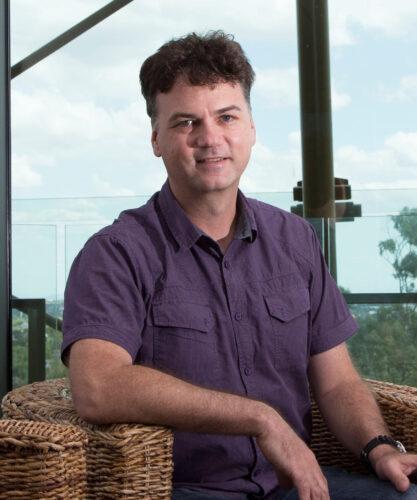
Professor Mark Kennard is a leading quantitative ecologist specializing in hydro-ecology and environmental flow management. He holds academic and administrative roles at Griffith University, including Deputy Director of the Australian Rivers Institute and Deputy Dean (Research) for Griffith Sciences. His research focuses on freshwater biodiversity, ecosystem health assessment, and conservation planning, particularly in northern Australia and the Murray-Darling Basin.
Education
- PhD in Environmental Science, Griffith University (2005)
- MPhil in Environmental Science, Griffith University (1995)
- BSc in Science, Griffith University (1990)
Research Interests
Professor Kennard’s work addresses critical challenges in freshwater ecosystems, including:
- Environmental flow management and water resource development impacts
- Biomonitoring and ecosystem health indicators
- Conservation of threatened freshwater species (e.g., Australian lungfish, Mary River cod)
- Climate change adaptation in riverine systems
- River connectivity and habitat restoration
Recent Research Trends
His publications emphasize urgent conservation actions for Australia’s freshwater fish, leveraging satellite data and hydrological modeling to assess water resource impacts. Key themes include groundwater-surface water interactions, flow-dependent fisheries, and the ecological consequences of climate change.
Awards & Grants
Recipient of the Whitley Medal for ecological publications and numerous grants, including leadership in the National Environmental Science Program (NESP) Resilient Landscapes Hub. Current projects focus on threatened species recovery, landscape resilience, and environmental flow management.
Advising & Teams
Supervised over 20 doctoral students on topics like fish health metrics, groundwater dynamics, and river restoration. Collaborates with agencies like the Commonwealth Environmental Water Holder and Seqwater.
Labs & Networks
Leads research teams at the Australian Rivers Institute and contributes to initiatives like the NESP Resilient Landscapes Hub and the Griffith Sciences group.