معرفی
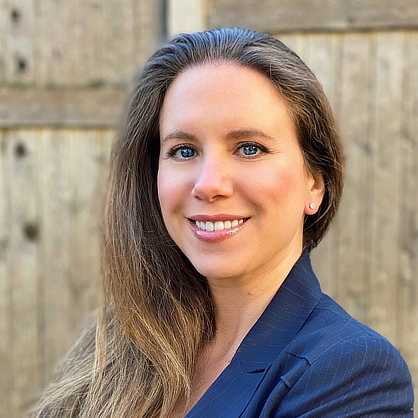
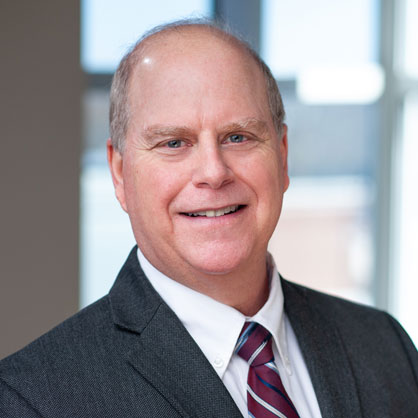
Dr. Marisia Fikiet is an Assistant Professor at the University of New Haven, specifically within the Henry C. Lee College of Criminal Justice and Forensic Sciences. She maintains an office in Dodds Hall, Room 403, and can be reached at MFikiet@newhaven.edu or (203) 479-4866.
Dr. Fikiet received her educational credentials from prestigious institutions:
- Ph.D. in Chemistry from the State University of New York at Albany (July 2019)
- M.A. in Forensic Science, Criminalistics from the University of New Haven (May 2015)
- B.A. in Chemistry (Summa cum laude) with a minor in mathematics from the University of Connecticut, Storrs (May 2013)
Her research focuses on toxicology with LC-MS/MS and spectroscopy of different types of forensic evidence. Dr. Fikiet is particularly known for her work in Raman spectroscopy applications in forensic science, including body fluid identification, controlled substance analysis, and trace evidence examination. Her research has practical applications in crime scene investigation and evidence analysis, with potential to address forensic backlogs in the criminal justice system.
Dr. Fikiet has received notable recognition for her work:
- Society for Applied Spectroscopy Poster Award for Outstanding Spectroscopic Research by a Student Member for poster at SciX 2018, Atlanta GA
- Federation of Analytical Chemistry and Spectroscopy Societies Gold Poster Award for poster at SciX 2018, Atlanta GA
She is actively involved in professional societies:
- American Academy of Forensic Sciences (Student Affiliate since 2014, Trainee Affiliate since 2020, Associate Member since 2021)
- Society for Applied Spectroscopy (Student Member since 2017, Regular member since 2019)
- Society of Forensic Toxicologists (Member since 2020)
Dr. Fikiet previously worked as a forensic toxicologist with the New York State Police from 2018 to 2022. She has collaborated with Igor Lednev, a Distinguished Professor of Chemistry at the University at Albany, on research related to Raman spectroscopy for forensic applications. Notably, she contributed to a National Science Foundation grant project developing a laser-based technology for forensic investigation that received $1 million in federal support as reported in October 2023.