معرفی
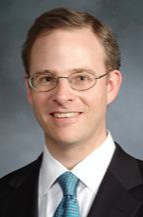
Marc Dubin, MD PhD, is a Clinical Associate Professor in Psychiatry and Neuroscience at Weill Cornell Medical College, Cornell University. He specializes in treating major depressive disorder and bipolar disorder, particularly in cases resistant to conventional therapies, integrating psychopharmacology, psychotherapy, and brain stimulation techniques like TMS and ECT. His research focuses on understanding the neuroimaging, neurophysiological, and neurostimulation mechanisms in depression, with a strong emphasis on optimizing treatment delivery through functional MRI and biomarker identification.
- Education: MD and PhD from the University of Rochester School of Medicine and Dentistry, and an SB from the University of Chicago.
Dubin's research spans neuroscience, psychiatry, and neuroimaging, with notable contributions to functional MRI artifact correction, brain stimulation efficacy in depression, and the role of respiratory patterns in neuroimaging data. His publications highlight advancements in precision mapping, optogenetics, and gut microbiota's influence on GABA modulation.
Key awards include the Weill Cornell Clinical and Translational Science Center Pilot Award, Brain & Behavior Research Foundation's NARSAD Young Investigator Grant, and the First Prize Abstract Award from the International Society for ECT and Neurostimulation. As an educator, he teaches medical students and psychiatry residents at Weill Cornell Medical College.
- Scientific Awards:
- Weill Cornell Medical College Clinical and Translational Science Center Pilot Award
- Brain & Behavior Research Foundation NARSAD Young Investigator Grant
- First Prize Abstract Award - International Society for ECT and Neurostimulation
Dubin's clinical practice at New York Presbyterian Hospital and Weill Cornell Medical College includes evaluating patients with treatment-resistant depression, employing TMS and ECT. His work bridges clinical psychiatry with cutting-edge neuroscience research, particularly in identifying circuit-based endophenotypes for familial depression and exploring neurostimulation's impact on brain morphology.