معرفی
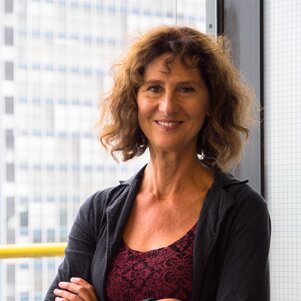
Maki Kato is a Professor at Waseda University's Faculty of Human Sciences, specializing in ergonomics and human factors engineering. Her research spans traffic psychology, cognitive psychology, safety engineering, and social systems engineering, with a focus on improving human-environment interactions for vulnerable populations including children and the elderly.
- Ph.D. (Human Sciences) from Waseda University
- Waseda University School of Human Sciences (1992)
- Waseda University Graduate School, Division of Science and Engineering
Professor Kato's research interests center on ergonomics, industrial engineering, and accessibility. She investigates human behavior in various contexts including traffic environments, workplace settings, and daily living situations. Her work particularly examines postural stability, walking mechanics, and the impact of environmental factors on human performance. She has conducted extensive research on traffic hierarchy systems, pedestrian safety, and the development of monitoring systems for elderly individuals through fixture acceleration measurements.
Her recent publications demonstrate a strong focus on practical applications of ergonomics in everyday life, with particular attention to traffic safety, workplace design, and aging populations. She has pioneered research on traffic hierarchy systems that prioritize vulnerable road users, developed methods for evaluating walking ability through sensor technology, and investigated the impact of modern technologies like smartphones on human behavior and safety.
Professor Kato is an active member of several professional organizations including the Japan Industrial Management Association, Japan Ergonomics Society, and Society of Human Behavior.
She has secured multiple research grants from the Japan Society for the Promotion of Science, including current projects on bicycle traffic safety education for children (2025-2028) and traffic hierarchy systems to substantiate pedestrian priority in crosswalks (2021-2024). Her earlier work includes projects on elderly monitoring systems, agricultural support through ICT, and community management systems for depopulated areas.
Her laboratory work focuses on developing monitoring systems for elderly individuals using fixture acceleration measurements, creating safe environments for remote work, and designing traffic systems that prioritize vulnerable road users through the concept of traffic hierarchy. Her research has practical applications in urban planning, transportation safety, and workplace design.