معرفی
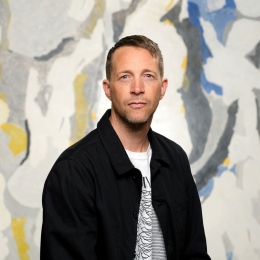
Magnus Kilger is an Associate Professor at Stockholm University's Department of Child and Adolescent Studies where he serves as program director for the Master's program in Child and Youth Science, including its leisure center specialization. He teaches courses on social relations in school with particular emphasis on teacher leadership, and supervises independent work across multiple departmental programs. His academic home is firmly within child and youth studies, with a strong connection to sports sociology and cultural analysis.
Kilger's research centers on children and youth sports and their impact on identity formation, with recent projects examining young girls' relationships with body image and eating habits, as well as how individuals navigate stigmatized positions related to weight. Methodologically, he employs discourse analysis and narrative analysis with a focus on everyday situations, utilizing diverse research approaches including interview studies, field studies (focused ethnography), social media analysis, and literature/policy document studies. His theoretical framework bridges sociology, psychology, and cultural studies to understand youth development through sports participation.
His scholarly output from 2015-2024 reveals consistent research on talent selection processes in youth sports, the commercialization of children's sports, and body image issues. Kilger's work consistently examines how cultural norms, discursive practices, and institutional frameworks shape young people's experiences, particularly in sports contexts. His interdisciplinary approach reveals how seemingly neutral practices like talent selection or coaching actually construct particular identities and social positions for youth participants.
As program director for the Master's program in Child and Youth Science, Kilger oversees curriculum development and academic standards for graduate education. His teaching responsibilities include courses on historical and contemporary perspectives on children's leisure, practical courses in child and youth science, and thesis supervision. His academic leadership extends to coordinating the Discourse Seminar (research seminar), indicating his active role in fostering scholarly discussion within his department.