معرفی
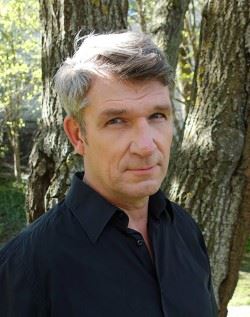
Magnus Bärtås serves as Deputy Vice-Chancellor for research, doctoral education and collaboration at Konstfack, University of Arts, Crafts and Design in Stockholm. He is an active artist, writer, and head of research at the institution, working primarily with text and video. Bärtås is an editor of VIS – Nordic Journal for Artistic Research and serves on the board for quality of SUHF (The Association of Swedish Higher Education Institutions).
He completed his dissertation in artistic research titled 'You Told Me – Work stories and video essays' at the University of Gothenburg in 2010, developing the concept of 'work stories' (verkberättelser) – narratives about the formation of materials and practices leading to artworks. His research interests span artistic research methodology, microhistories, video essays, and spatial text practices. Bärtås led the research project 'Microhistories' (funded by the National Research Council) from 2013-2015, which explored intersections between historical microhistory approaches and visual art. This project evolved into a postgraduate course at Konstfack since 2019.
Bärtås frequently collaborates with Fredrik Ekman on essays and books, including 'All monsters must die,' shortlisted for the August Prize in 2011. Göteborgs Konsthall presented a retrospective exhibition of his work in 2016. His current research practice investigates visual/spatial text practice based on the assemblage of embroidery.
His recent scholarly output shows continued focus on microhistorical approaches to art, contemporary artistic research, political and cultural analysis, and explorations of memory through visual and textual practices.
- Grand Prize at Oberhausen International Film Festival for 'Madame & Little Boy'
- Shortlisted for the August Prize 2011 for 'All monsters must die'
As Deputy Vice-Chancellor, Bärtås oversees research strategy, doctoral education programs, and external collaborations at Konstfack. His work bridges artistic practice and academic research, demonstrating how creative processes can generate new knowledge and understanding.