معرفی
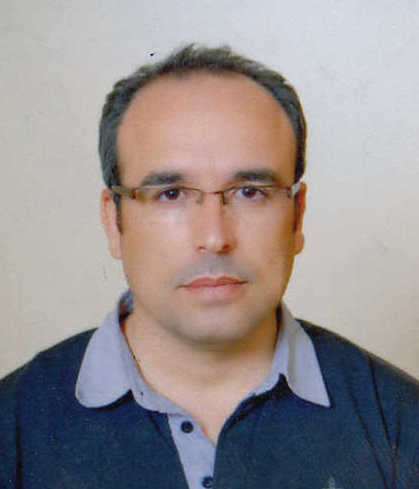
Prof. Murat Işık is a full Professor in the Department of Metallurgical and Materials Engineering at Bingöl University's Faculty of Engineering and Architecture, with affiliated appointments in the Chemistry program at the Institute of Science. His academic journey spans over 20 years, including foundational roles at Middle East Technical University and Bilkent University's nanotechnology center.
His educational background includes:
- B.S. in Chemistry Teaching, Middle East Technical University (2002)
- M.S. in Chemistry, Middle East Technical University (2005)
- Ph.D. in Chemistry, Middle East Technical University (2011)
Işık's research bridges synthetic organic chemistry and biomedical applications through two interconnected pillars: (1) designing innovative organocatalysts (particularly 2-aminoDMAP derivatives) for enantioselective synthesis, and (2) engineering water-soluble BODIPY dyes as selective sensors for biological targets. His work demonstrates exceptional translational potential, converting molecular designs into functional tools for cancer therapy and environmental monitoring. The consistent publication in top-tier journals like Angewandte Chemie reflects rigorous methodology and conceptual novelty.
Analysis of his 15 most recent publications reveals a strategic evolution from fundamental catalyst development (2004-2013) toward biomedical applications (2014-2016), with increasing interdisciplinary collaboration. Key trends include the refinement of bifunctional catalytic systems and the molecular engineering of BODIPY architectures for aqueous compatibility and target specificity.
His scientific achievements include:
- Best Poster Award, 3rd Molecular Sensors Congress (Seoul, 2015)
- Angewandte Chemie cover feature and 'hot paper' designation (2015)
- ChemInform highlight for organocatalysis methodology (2015)
- Multiple high-impact publications in Journal of Organic Chemistry and Organic Letters
As an advisor, Işık maintains an active graduate mentorship program with documented thesis supervision and committee roles. His research is sustained by continuous funding including a TÜBİTAK Career Project and multiple Bingöl University grants, totaling over 4 years of active support. He serves as a trusted reviewer for leading chemistry journals including Scientific Reports and Chemistry - An Asian Journal, demonstrating peer recognition of his expertise.
Though no formal lab name is specified, his research group operates as a dynamic hub for molecular design at Bingöl University, currently advancing projects on zwitterionic BODIPY systems and biological thiol detection. The group maintains strong connections with national research centers like UNAM and international collaborators, ensuring exposure to cutting-edge methodologies in chemical biology.