معرفی
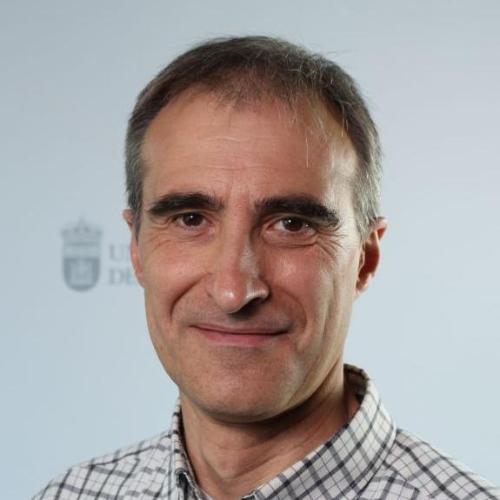
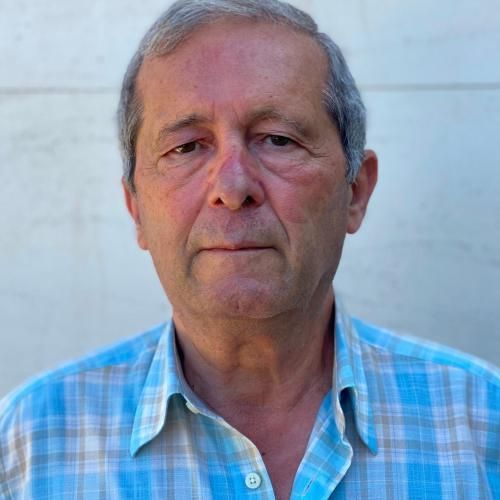
Manuel Garcia Basallote is a Full Professor in the Department of Materials Science, Metallurgical Engineering, and Inorganic Chemistry at the University of Cádiz. His primary affiliation is with the Instituto de Biomoléculas (INBIO). He earned his Ph.D. in Inorganic Chemistry from the University of Cádiz with a thesis on coordination compounds of Pd(II) and Pt(II) with antitumoral properties (1985). His research focuses on transition metal complexes, metal clusters (e.g., Mo3S4, W3S4), catalytic reaction mechanisms, and medicinal applications of coordination compounds.
His work explores the reactivity of metal clusters in catalytic processes, including alkene/alkyne functionalization, oxygen atom transfer, and hydrogen activation. Notable contributions include studies on nonheme iron complexes mimicking enzymatic behavior, proton-coupled electron transfer, and the design of air-stable catalysts. He also investigates synthetic methodologies for stabilizing reactive intermediates (e.g., ferryl species) and employs computational tools (DFT) to model reaction pathways.
Basallote’s publications emphasize mechanistic insights into cluster-based catalysis, ligand effects, and substrate activation. His research spans disciplines like bioinorganic chemistry (antioxidant complexes), materials science (cluster-surface interactions), and medicinal chemistry (antitumor agents). He has contributed to advancing understanding of sulfur-mediated reactivity and the role of spin states in catalytic activity.
His educational contributions include a decade of tutorial experience at the Faculty of Science, Cádiz, as noted in his 2009 paper. Despite no explicitly listed awards, his prolific publication record (over 80 articles since 1985) reflects sustained academic impact.