معرفی
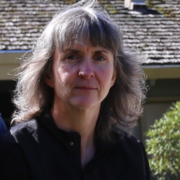
Dr. Lyla Taylor is a Research Fellow at the School of Biosciences, University of Sheffield, specializing in climate change mitigation through enhanced rock weathering. She is a key contributor to the Leverhulme Centre for Climate Change Mitigation (LC3M), where her work focuses on developing scientifically sound approaches to using crushed silicate rocks in agricultural settings for atmospheric CO2 removal while improving soil health and crop productivity.
Dr. Taylor's research interests span multiple dimensions of climate change mitigation and environmental science. Her work primarily focuses on enhanced rock weathering as a carbon dioxide removal strategy, examining how silicate minerals interact with agricultural systems to sequester carbon. She investigates the biogeochemical processes involved in rock weathering, the impacts on soil chemistry and fertility, and the potential co-benefits for crop production. Her research also explores the historical context of weathering processes and their role in Earth's climate system over geological timescales, connecting past climate changes with potential future mitigation strategies.
Analysis of Dr. Taylor's publication record reveals a strong emphasis on practical applications of enhanced weathering for carbon sequestration. Her work spans from fundamental laboratory studies to field trials examining real-world efficacy of rock dust application in agricultural settings. A recurring theme is how weathering processes can be optimized for maximum carbon removal while providing agricultural co-benefits such as improved soil fertility and crop yields. Her research addresses challenges related to scaling up these techniques and understanding their long-term environmental impacts across diverse ecosystems.
Dr. Taylor has contributed to numerous collaborative research projects investigating enhanced weathering as a climate change mitigation strategy. Her work forms part of a broader effort at the University of Sheffield to develop scientifically sound approaches to carbon dioxide removal that can complement emissions reduction efforts in achieving climate goals. She has collaborated extensively with Professor David Beerling, Director of the LC3M, and other leading researchers in the field of climate change mitigation.