
معرفی
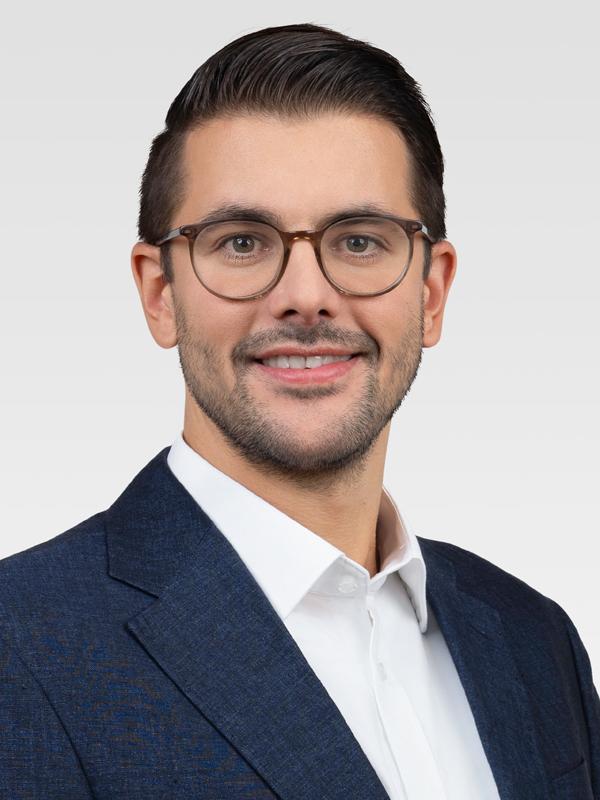
Lukas Hack serves as a Lecturer in the Department of Management, Technology, and Economics at ETH Zurich and maintains dual post-doctoral affiliations with ETH Zurich and the University of Mannheim. He completed his doctoral studies at the University of Mannheim in 2024, establishing himself as an emerging scholar in macroeconomic policy research with active engagements across European academic institutions.
Hack holds a PhD from the University of Mannheim (2024), with prior educational milestones not specified in available materials.
His research program spans macroeconomics, monetary economics, economic history, and public economics, with particular focus on real-time policy interactions. Hack investigates how monetary policy transmits through heterogeneous agents, the fiscal consequences of unindexed progressive taxation ("bracket creep"), and firm-level price-setting responses to macroeconomic news. His methodological innovations include high-frequency event studies, randomized survey designs, and novel identification strategies leveraging institutional features like FOMC voting rotations.
Analysis of Hack's publication trajectory reveals three dominant research strands: (1) redefining monetary policy identification by distinguishing systematic from unsystematic components using FOMC composition; (2) documenting how inflation-driven tax bracket creep steepens the Phillips curve through labor supply channels; and (3) analyzing sovereign debt restructuring following credit rating downgrades. His work consistently bridges theoretical modeling with empirical validation using administrative data, daily firm surveys, and historical records.
Hack has earned significant recognition:
- ETH Career Seed Award (CHF 30,000) for early-career research excellence
- Reinhard Selten Award for contributions to monetary-fiscal interactions
As a recent PhD graduate, Hack is developing independent research capacity supported by the ETH Career Seed Award. His collaborative work with Istrefi, Meier, Rostam-Afschar, and Diebold demonstrates strong partnership networks, though formal graduate student advising is not yet documented. He actively participates in major conferences including Sailing the Macro, CEPR Annual Symposium, and SNB Research Conference, reflecting his integration into central banking research communities.
Hack operates within ETH Zurich's Department of Management, Technology, and Economics infrastructure without a dedicated named laboratory, but leverages the KOF Swiss Economic Institute resources through his office at LEE F 205.


