معرفی
Prof. Dr. Katharina Gapp is an Assistant Professor at the Department of Health Sciences and Technology (D-HEST) at ETH Zurich, affiliated with the Institute for Neuroscience. Her research focuses on understanding how environmental stressors influence disease risk across generations through epigenetic mechanisms, particularly in the context of neuroendocrinology and germline transmission. She leads the Gapp Lab, which employs advanced genomic and proteomic techniques to study stress-induced molecular changes and their intergenerational effects.
- Education: While specific academic credentials are not explicitly detailed in the provided texts, her role as an Assistant Professor indicates a PhD in a relevant field (likely molecular biology or neuroscience).
- Key Roles: Tutor for Molecular Health Sciences and Neuroscience MSc programs at ETH Zurich.
Research Interests: Gapp’s work centers on the interface between the environment, neuroendocrine systems, and epigenetics. Her lab investigates how stress hormones and epigenetic modifications in germ cells (e.g., sperm) can shape offspring development and predispose them to neuropsychiatric and metabolic disorders. Techniques used include ATAC-Seq, CRISPR, PROTACs, and omics profiling.
Recent Work Trends: Publications emphasize translational tools (e.g., PROTACs for protein degradation), chromatin accessibility analysis, and RNA-mediated inheritance. Her group also explores the molecular basis of stress-induced phenotypes in vivo and in cellular models.
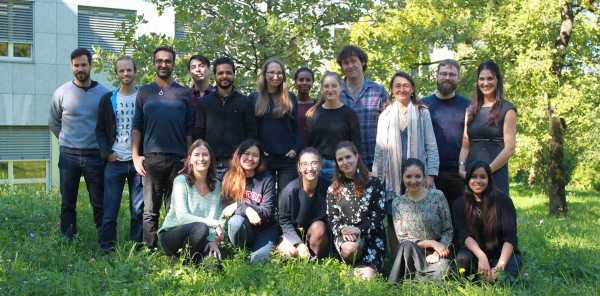
- Advising: Supervises PhD students (e.g., Robin Scheuplein) and fosters a collaborative, ambitious research environment.
- Labs/Teams: Head of the Gapp Lab, collaborating with institutions like Leiden University and ETH Basel.
Future Directions: Developing novel interventions to counteract stress-related disease risks and advancing understanding of epigenetic transmission mechanisms.